
For decades, the advancement of computing power has followed Moore’s Law, doubling the number of transistors on a microchip every two years. However, as we approach the physical limits of silicon-based hardware, a new frontier is emerging: Quantum Computing. Unlike classical computers that process information in bits (0 or 1), quantum computers utilize "qubits." These units of information leverage the principles of superposition and entanglement, allowing them to perform complex calculations at speeds that were previously unimaginable.
The practical applications of this technology are vast and potentially transformative. In the field of pharmacology, quantum processors can simulate molecular interactions with high precision, significantly accelerating the discovery of life-saving drugs. In finance, they can optimize massive portfolios and predict market fluctuations with unprecedented accuracy. Furthermore, quantum computing could revolutionize cryptography, although this presents a double-edged sword: while it can create virtually unhackable communication channels, it also threatens to render current encryption methods obsolete.
Despite the hype, significant technical hurdles remain. Quantum states are incredibly fragile; the slightest external disturbance, such as a change in temperature or electromagnetic interference, can cause "decoherence," leading to calculation errors. Maintaining these systems requires near-absolute zero temperatures, making them expensive and difficult to scale. Nevertheless, tech giants and governments are in a high-stakes race to achieve "quantum supremacy"—the point where a quantum device can solve a problem that no classical computer can in a reasonable timeframe. As we stand on the precipice of this new era, the integration of quantum technology into our daily lives remains a question of "when," not "if."
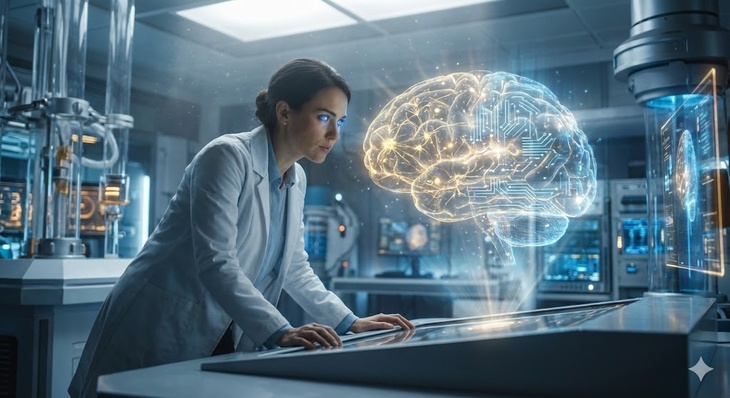
The Quantum Leap: Unleashing the Potential of Future Computing
中文翻譯
幾十年來,運算能力的進步一直遵循摩爾定律,即微晶片上的電晶體數量每兩年翻一倍。然而,隨著我們接近矽基硬體的物理極限,一個新的領域正在浮現:量子運算。與以位元(0 或 1)處理資訊的傳統電腦不同,量子電腦利用「量子位元」。這些資訊單位利用疊加與糾纏的原理,使它們能以先前無法想像的速度執行複雜計算。這項技術的實際應用非常廣泛且具備潛在的變革性。在藥理學領域,量子處理器可以高精度模擬分子相互作用,顯著加速救命藥物的研發。在金融領域,它們可以優化龐大的投資組合並以史無前例的準確度預測市場波動。此外,量子運算可能會徹底改變密碼學,儘管這是一把雙面刃:雖然它能創造幾乎無法破解的通訊頻道,但也威脅到會讓目前的加密方法變得過時。
儘管備受期待,但重大的技術障礙依然存在。量子態極其脆弱;最輕微的外部干擾(如溫度變化或電磁干擾)都會導致「去相干」,從而導致計算錯誤。維護這些系統需要接近絕對零度的環境,這使得它們造價昂貴且難以規模化。儘管如此,科技巨頭和各國政府正投入一場高風險競賽,以實現「量子霸權」——即量子裝置能解決傳統電腦無法在合理時間內解決的問題。當我們站在這個新時代的邊緣時,量子技術融入我們的日常生活已不再是「是否」的問題,而是「何時」的問題。
🔑 重點單字 (Vocabulary)
- superposition n.. 疊加
- entanglement n.. 糾纏
- unprecedented adj.. 史無前例的
- cryptography n.. 密碼學
- obsolete adj.. 過時的
- decoherence n.. 去相干
- interference n.. 干擾
- supremacy n.. 霸權/優勢
- precipice n.. 邊緣/懸崖
- integration n.. 整合
掌握一種語言等於擁有一個新世界
 語言健身房 https://www.langym.com 提供
語言健身房 https://www.langym.com 提供
