
In the fast-paced modern world, characterized by the glow of LED screens and the demands of shift work, humans are increasingly becoming detached from their natural biological rhythms. At the heart of this physiological system is the "circadian rhythm," an internal 24-hour clock that regulates essential functions such as sleep-wake cycles, hormone release, and body temperature. While often overlooked, maintaining alignment with this natural cycle is fundamental to long-term physical and mental well-being.
The primary driver of the circadian rhythm is light. When light enters the eyes, it signals the brain's suprachiasmatic nucleus to suppress the production of melatonin, the hormone responsible for sleep. However, the pervasive use of blue-light-emitting devices in the evening can trick the brain into thinking it is still daytime. This disruption, known as "circadian misalignment," has been linked to a plethora of health issues, including obesity, cardiovascular disease, and chronic mood disorders. Research suggests that even minor shifts in these rhythms can impair cognitive function and lower the body’s immune response.
Furthermore, the concept of "social jetlag"—the discrepancy between our internal clock and the schedules imposed by work or social obligations—is becoming a global health concern. Unlike travel-induced jetlag, which is temporary, social jetlag is a chronic condition that can lead to metabolic syndrome. To mitigate these risks, experts recommend establishing a consistent sleep schedule, maximizing exposure to natural sunlight during the day, and minimizing artificial light at night. As we continue to inhabit a 24/7 society, understanding and respecting our biological imperatives is no longer a luxury, but a necessity for a healthy life.
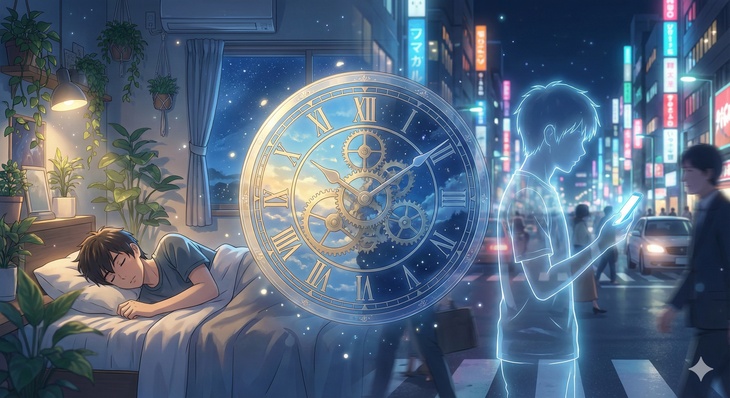
Harmonizing with the Internal Clock: The Science of Circadian Rhythms
中文翻譯
在節奏快速的現代世界中,以 LED 螢幕的光芒和輪班工作的需求為特徵,人類正日益與其自然的生物節律脫節。生理系統的核心是「生理時鐘(circadian rhythm)」,這是一個內在的 24 小時時鐘,調節著睡眠-覺醒週期、激素釋放和體溫等基本功能。雖然常被忽視,但保持與這一自然週期的一致性是長期身心健康的根本。生理時鐘的主要驅動力是光。當光線進入眼睛時,它會向大腦的神經核發出信號,抑制褪黑激素(負責睡眠的激素)的產生。然而,晚間普遍使用發射藍光的設備會誤導大腦,使其認為仍是白天。這種被稱為「生理時鐘失調」的干擾與過多的健康問題有關,包括肥胖、心血管疾病和慢性情緒障礙。研究表明,即使是這些節律的微小轉變也會損害認知功能並降低身體的免疫反應。
此外,「社會時差(social jetlag)」的概念——即我們的內在時鐘與工作或社交義務強加的時間表之間的差異——正成為全球性的健康關注點。與旅行引起的暫時性時差不同,社會時差是一種慢性狀況,可能導致代謝症候群。為了減輕這些風險,專家建議建立規律的睡眠時間表,白天增加自然陽光的照射,並在夜間減少人工光。隨著我們繼續生活在一個全天候運作的社會中,理解並尊重我們的生物需求不再是一種奢侈,而是健康生活的必要條件。
🔑 重點單字 (Vocabulary)
- alignment n.. 一致;排成直線
- pervasive adj.. 普遍的;遍布的
- melatonin n.. 褪黑激素
- plethora n.. 過剩;過多
- impair v.. 損害;削弱
- discrepancy n.. 差異;不一致
- metabolic adj.. 新陳代謝的
- mitigate v.. 減輕;緩和
- imperative n.. 迫切的需求
- consistent adj.. 一致的
掌握一種語言等於擁有一個新世界
 語言健身房 https://www.langym.com 提供
語言健身房 https://www.langym.com 提供
