
The global shift toward remote and hybrid work models, initially a necessity during the pandemic, has evolved into a permanent fixture of the modern professional landscape. While employees celebrate the flexibility and the elimination of grueling commutes, this transition has triggered a significant recalibration of urban economies. Major metropolitan hubs, once defined by their bustling central business districts (CBDs), are now facing a phenomenon often described as the "urban doom loop," where declining office occupancy leads to a cascade of economic challenges.
The most immediate impact is visible in the commercial real estate sector. With many corporations downsizing their physical footprints to cut costs, office vacancy rates in cities like New York, San Francisco, and London have reached historic highs. This decline in occupancy does not merely affect landlords; it has a detrimental effect on the ecosystem of small businesses that rely on office foot traffic. Local dry cleaners, cafes, and restaurants, which once thrived on the lunchtime rush, are now struggling to remain viable. Consequently, as these businesses close, the tax revenue for city governments diminishes, potentially leading to cuts in essential public services.
However, some economists view this disruption as a necessary impetus for urban evolution. The "hollowing out" of commercial cores presents a unique opportunity to convert vacant office buildings into residential units, addressing chronic housing shortages in major cities. This transition toward "15-minute cities"—where living, working, and leisure are all within a short walk—could lead to more resilient and sustainable urban environments. Nevertheless, the path to this transformation is fraught with regulatory and financial hurdles. Whether cities can successfully pivot from being corporate-centric hubs to vibrant, multi-use communities will be the defining economic challenge of the next decade.
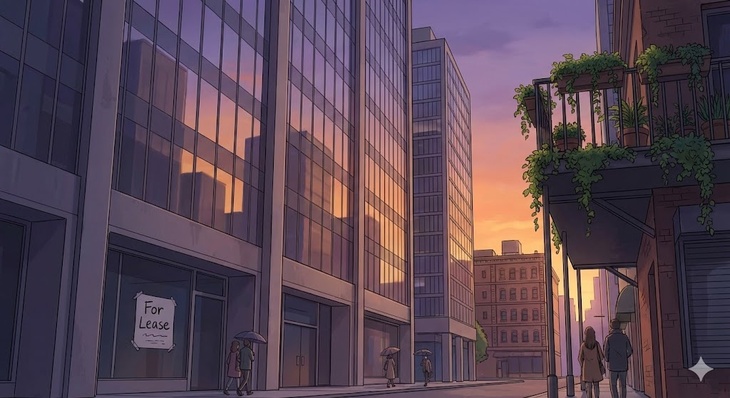
The Hollowed Core: Remote Work and the Transformation of Urban Economies
中文翻譯
全球向遠距和混合工作模式的轉變,最初是疫情期間的必然之舉,如今已演變成現代職業景觀中的固定形態。雖然員工慶幸於工作的靈活性和告別了精疲力竭的通勤,但這一轉變也引發了城市經濟的重大重新調整。曾經以繁忙的中心商業區(CBD)為特徵的大型都市中心,現在正領教被稱為「城市末日循環」的現象,即辦公室入駐率下降導致的一連串經濟挑戰。最直接的影響體現在商用不動產領域。隨著許多企業縮減實體辦公空間以降低成本,紐約、舊金山和倫敦等城市的辦公室空置率已達到歷史高點。入駐率的下降不僅影響房東,還對依賴辦公室人流的小型商業生態系統產生了不利的影響。曾經依靠午餐尖峰時段繁榮發展的在地乾洗店、咖啡館和餐廳,現在正掙扎著維持生存。隨之而來的是,隨著這些企業倒閉,市政府的稅收減少,可能導致基本公共服務的削減。
然而,一些經濟學家將這種干擾視為城市進化的必要推動力。商業核心區的「掏空」提供了一個將閒置辦公大樓改建為住宅單元的獨特機會,藉此解決大城市長期住房短缺的問題。這種向「15 分鐘城市」(即生活、工作和休閒都在步行短距離內)的轉變,可能會帶來更具韌性且永續的城市環境。儘管如此,這場轉型的道路充滿了法規和財務障礙。城市是否能成功從以企業為中心的中心轉變為充滿活力的多功能社區,將是未來十年經濟發展的決定性挑戰。
🔑 重點單字 (Vocabulary)
- recalibration n.. 重新調整;再校準
- occupancy n.. 入駐;佔用
- downsizing v./n.. 縮減規模
- detrimental adj.. 不利的;有害的
- viable adj.. 可行的;能生存的
- diminish v.. 減少;削弱
- impetus n.. 推動力;促進
- resilient adj.. 有韌性的
- fraught adj.. 充滿(問題/危險)的
- pivot v.. 轉向
掌握一種語言等於擁有一個新世界
 語言健身房 https://www.langym.com 提供
語言健身房 https://www.langym.com 提供
