
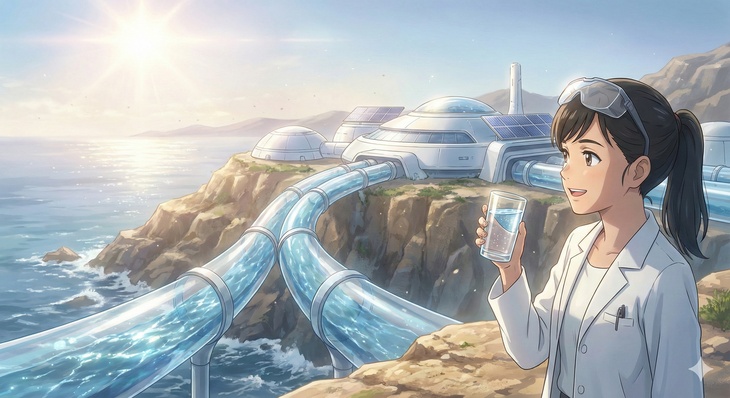
As the global population burgeons and climate change alters traditional precipitation patterns, the specter of water scarcity has become one of the most pressing humanitarian crises of the 21st century. Regions that once relied on predictable seasonal rains or vast underground aquifers are finding their sources depleted or contaminated. In response to this existential threat, many nations are turning toward the ocean, investing heavily in desalination technology to transform salt water into a potable resource.
Desalination is not a new concept, but recent technological advancements have significantly lowered its energy requirements and costs. The most prevalent method today is reverse osmosis, which involves forcing seawater through a semi-permeable membrane to remove salt and impurities. Countries in the Middle East, such as Israel and Saudi Arabia, have already achieved a high degree of water security through this method. However, the process is not without its environmental controversies. The energy-intensive nature of these plants often relies on fossil fuels, and the disposal of "brine"—the highly concentrated salt byproduct—can disrupt delicate marine ecosystems if not managed properly.
Despite these drawbacks, the imperative for reliable water sources is driving innovation. Researchers are now experimenting with solar-powered desalination and graphene-based membranes that are more efficient and durable. Furthermore, international cooperation is becoming paramount, as water-stressed nations seek to share infrastructure and technical expertise. As we navigate an era of environmental uncertainty, the viability of future urban civilizations may depend on our ability to harness the vastness of the oceans. The challenge lies in balancing our desperate need for water with the long-term health of our planet’s oceans.
Thirsting for Solutions: The Global Rise of Desalination
中文翻譯
隨著全球人口激增和氣候變遷改變了傳統的降水模式,水資源短缺的陰影已成為 21 世紀最緊迫的人道主義危機之一。曾經依賴可預測季節性降雨或廣大地下含水層的地區,正發現其水源枯竭或受污染。為了應對這一生存威脅,許多國家正轉向海洋,大力投資海水淡化技術,將鹽水轉化為可飲用的資源。海水淡化並非新概念,但近期的技術進步已顯著降低了其能量需求和成本。當前最盛行的方法是逆滲透,其原理是迫使海水通過半透膜以去除鹽分和雜質。中東國家如以色列和沙烏地阿拉伯,已透過此方法實現了高度的水安全。然而,這一過程並非沒有環境爭議。這些工廠的高耗能特性通常依賴化石燃料,且「濃鹽水」(高濃度鹽分副產品)的排放若處理不當,可能會破壞脆弱的海洋生態系統。
儘管有這些缺點,對可靠水源的迫切需求正推動著創新。研究人員現在正在實驗太陽能海水淡化和石墨烯薄膜,後者更高效且耐用。此外,國際合作變得至關重要,因為缺水國家正尋求共享基礎設施和技術專業知識。在我們應對環境不確定性的時代,利用廣闊海洋的能力可能決定未來城市文明的生存能力。挑戰在於如何在我們對水的迫切需求與地球海洋的長期健康之間取得平衡。
🔑 重點單字 (Vocabulary)
- potable adj.. 可飲用的
- precipitation n.. 降水;降雨量
- aquifer n.. 含水層
- semi-permeable adj.. 半透性的
- controversy n.. 爭議
- brine n.. 濃鹽水;滷水
- imperative n.. 迫切的需求;極重要的
- paramount adj.. 至高無上的;首要的
- viability n.. 生存能力;可行性
- harness v.. 利用;控制
掌握一種語言等於擁有一個新世界
 語言健身房 https://www.langym.com 提供
語言健身房 https://www.langym.com 提供
