
Traditional festivals have always been the cornerstone of cultural identity, providing a sense of belonging and continuity across generations. However, in the 21st century, the way we celebrate these occasions has undergone a significant transformation. With the rapid advancement of technology, many ancient customs are being blended with modern digital practices, creating a unique hybrid experience that appeals to younger generations.
In the past, festivals like the Lunar New Year or Christmas were primarily local events centered around physical gatherings and shared meals. Today, social media platforms allow people to share their celebrations with a global audience in real time. Virtual reality (VR) and augmented reality (AR) are also being used to preserve heritage sites that are at risk of disappearing. For example, interactive digital exhibits can now recreate traditional dance performances or religious ceremonies, making them accessible to people who cannot travel to the actual locations.
While some critics argue that digital celebrations lack the "soul" of physical interaction, others believe that technology is actually saving dying traditions. By digitizing ancient texts and songs, cultural organizations ensure that this knowledge is not lost to time. Furthermore, digital platforms provide a space for marginalized cultures to showcase their unique heritage to the world, fostering a more inclusive global society.
As we look toward the future, the challenge lies in finding a balance between innovation and authenticity. It is essential to embrace new tools while still respecting the core values and meanings behind each festival. Ultimately, whether celebrated in person or online, the true spirit of a festival remains the same: a time to reflect, to give thanks, and to strengthen the bonds of community.
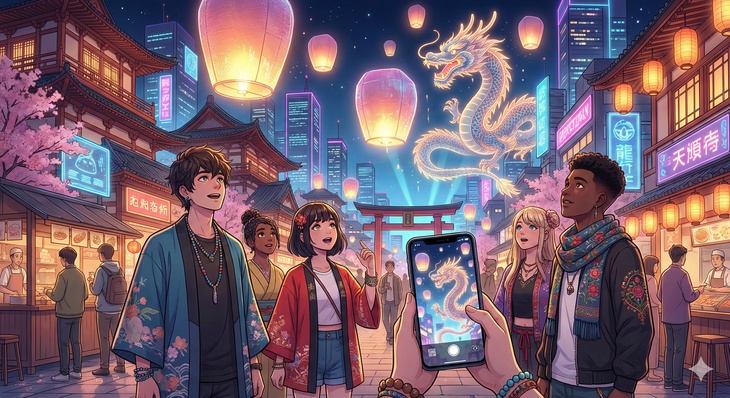
The Evolution of Traditional Festivals in the Digital Age
中文翻譯
傳統節慶一直是文化認同的基石,為代際之間提供了歸屬感和延續感。然而,在 21 世紀,我們慶祝這些場合的方式經歷了重大的轉變。隨著技術的飛速發展,許多古老習俗正與現代數位實踐相結合,創造出一種吸引年輕一代的獨特混合體驗。過去,像農曆新年或聖誕節這樣的節日主要是以實體聚會和共享餐點為中心的在地活動。今天,社群媒體平台讓大眾能即時與全球觀眾分享他們的慶祝活動。虛擬實境 (VR) 和擴增實境 (AR) 也被用於保護面臨消失風險的遺產地。例如,互動式數位展覽現在可以重現傳統舞蹈表演或宗教儀式,讓無法親自前往實地的人也能接觸到這些文化。
雖然一些批評者認為數位慶祝活動缺乏實體互動的「靈魂」,但其他人則認為技術實際上正在挽救瀕臨滅絕的傳統。透過將古老的文本和歌曲數位化,文化組織確保了這些知識不會隨時間流逝而遺失。此外,數位平台為邊緣文化提供了向世界展示其獨特遺產的空間,促進了更加包容的全球社會。
展望未來,挑戰在於如何在創新與真實性之間找到平衡。在尊重每個節慶背後的核心價值和意義的同時,擁抱新工具是至關重要的。歸根結底,無論是親自慶祝還是透過網路慶祝,節慶的真正精神始終不變:這是一個反思、感恩和加強社區聯繫的時刻。
🔑 重點單字 (Vocabulary)
- transformation n.. 轉變;變革
- preserve v.. 保護;保存
- accessible adj.. 可接近的;易於得到的
- inclusive adj.. 包容的;包括在內的
- essential adj.. 至關重要的;必要的
- cornerstone n.. 基石;最重要部分
- continuity n.. 延續性;連貫性
- hybrid adj.. 混合的
- authenticity n.. 真實性;可靠性
- marginalized adj.. 被邊緣化的
掌握一種語言等於擁有一個新世界
 語言健身房 https://www.langym.com 提供
語言健身房 https://www.langym.com 提供
