The rapid ascension of generative artificial intelligence (AI) has ignited a fierce debate within the creative industries, challenging long-held assumptions about the nature of art and authorship. Tools capable of generating high-fidelity images, sophisticated prose, and complex musical compositions from simple text prompts have democratized creative expression, allowing individuals without formal training to bring their visions to life. However, this technological leap has also raised profound ethical and legal questions, particularly regarding the infringement of intellectual property.
At the core of the controversy is the data used to train these large-scale models. Most generative AIs are "fed" vast datasets harvested from the internet, often including copyrighted works by professional artists, writers, and photographers without their explicit consent. Many creators argue that this practice constitutes a form of digital plagiarism, as the AI learns to mimic specific styles and techniques, potentially devaluing the original labor. Consequently, several high-profile lawsuits are currently making their way through courts, the outcomes of which will likely define the legal boundaries of AI training for decades to come.
Despite these concerns, many professionals are beginning to view AI as an augmentative tool rather than a replacement. In fields like graphic design and film production, AI can rapidly generate prototypes, allowing humans to focus on higher-level conceptualization and emotional storytelling. The challenge lies in establishing a transparent framework for attribution and compensation. As the line between human and machine-made content continues to blur, the industry must adapt to ensure that innovation does not come at the expense of the creators who provided the foundation for these "silicon muses." The future of creativity may not be a competition between man and machine, but a synergistic partnership.
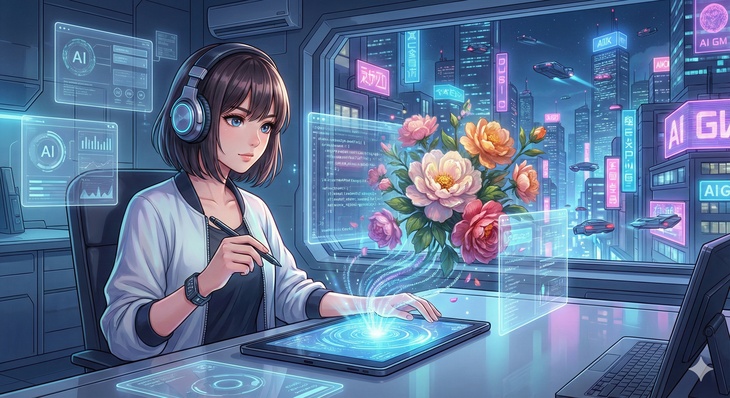
The Silicon Muse: Generative AI and the Future of Creativity
中文翻譯
生成式人工智慧(AI)的迅速崛起在創意產業中引發了激烈的辯論,挑戰了長期以來關於藝術本質與著作權的假設。能夠根據簡單的文字提示生成高保真圖像、精鍊散文和複雜樂曲的工具使創意表達大眾化,讓沒有受過正式訓練的人也能實現他們的願景。然而,這一技術飛躍也提出了深刻的倫理和法律問題,特別是關於知識產權的侵權。爭議的核心在於用於訓練這些大規模模型的數據。大多數生成式 AI 被「餵食」了從互聯網上擷取的龐大數據集,其中通常包括專業藝術家、作家和攝影師的有版權作品,且未經其明確同意。許多創作者認為這種行為構成了一種形式的數位抄襲,因為 AI 學習模仿特定的風格和技術,可能貶低了原始勞動的價值。因此,幾起備受矚目的訴訟目前正在法院審理中,其結果可能會定義未來幾十年 AI 訓練的法律邊界。
儘管有這些疑慮,許多專業人士開始將 AI 視為一種增強型工具而非替代品。在平面設計和電影製作等領域,AI 可以快速生成原型,讓人類能夠專注於更高層次的概念化和情感敘事。挑戰在於建立一個透明的歸屬與補償框架。隨著人類與機器創作內容之間的界限繼續模糊,產業必須做出調整,以確保創新不會以犧牲那些為這些「矽像女神」提供基礎的創作者為代價。創意的未來可能不是人類與機器之間的競爭,而是一種協同的夥伴關係。
🔑 重點單字 (Vocabulary)
- infringement n.. 侵犯;違反
- authorship n.. 作者身分
- plagiarism n.. 抄襲
- devalue v.. 貶低
- augmentative adj.. 增加的
- conceptualization n.. 概念化
- transparent adj.. 透明的
- attribution n.. 歸屬
- synergistic adj.. 協同的
- muse n.. 靈感來源
掌握一種語言等於擁有一個新世界
 語言健身房 https://www.langym.com 提供
語言健身房 https://www.langym.com 提供
