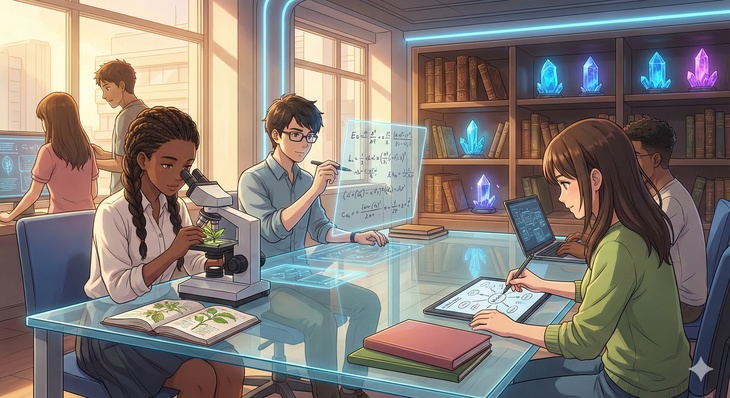
In the traditional education system, subjects are often taught in isolation, with clear boundaries between science, history, and the arts. However, as the challenges of the 21st century become increasingly complex, educators are shifting their focus toward interdisciplinary learning. This approach encourages students to combine knowledge from multiple fields to solve real-world problems. For instance, addressing climate change requires not only an understanding of environmental science but also insights into economics, politics, and social behavior. By breaking down these academic "silos," students develop a more comprehensive worldview.
Interdisciplinary learning also fosters critical thinking and creativity. When students are forced to look at a single issue from different perspectives, they learn to identify connections that are not immediately obvious. This cognitive flexibility is highly valued in the professional world, where innovation often occurs at the intersection of different industries. Research suggests that students who engage in cross-disciplinary projects are better at synthesizing information and communicating their ideas to diverse audiences.
Despite its benefits, implementing this model in schools can be difficult. It requires significant changes to the curriculum and high levels of collaboration among teachers from different departments. Furthermore, some critics argue that focusing too much on multiple subjects might lead to a lack of depth in a student's primary field of study. To address this, many universities now offer "bridge courses" that provide a solid foundation in core subjects while encouraging elective exploration in other areas. Ultimately, the goal is to produce graduates who are not just specialists, but versatile thinkers capable of navigating an interconnected global landscape.
The Importance of Interdisciplinary Learning in Modern Education
中文翻譯
在傳統教育體系中,學科通常是被孤立教授的,科學、歷史和藝術之間有著清晰的界限。然而,隨著 21 世紀的挑戰變得日益複雜,教育工作者正將注意力轉向跨學科學習。這種方法鼓勵學生結合多個領域的知識來解決現實世界的問題。例如,應對氣候變遷不僅需要了解環境科學,還需要對經濟、政治和社會行為有深刻見解。透過打破這些學術「孤島」,學生能建立更全面的世界觀。跨學科學習還能培養批判性思考和創造力。當學生被迫從不同角度看待單一問題時,他們會學會辨識那些並不明顯的聯繫。這種認知靈活性在專業領域中備受重視,因為創新往往發生在不同行業的交匯處。研究顯示,參與跨學科專案的學生更擅長綜合資訊,並能將自己的想法傳達給不同的受眾。
儘管有其優點,在學校實施這種模式仍具挑戰。它需要對課程進行重大調整,並要求不同部門的教師之間進行高度協作。此外,一些批評者認為,過度關注多個學科可能會導致學生在主要研究領域缺乏深度。為了解決這個問題,許多大學現在提供「橋樑課程」,在鞏固核心學科基礎的同時,鼓勵在其他領域進行選修探索。最終,目標是培養出不僅是專家,而且是能夠在互連的全球版圖中航行的全方位思考者。
🔑 重點單字 (Vocabulary)
- comprehensive adj.. 全面的;廣泛的
- synthesizing v.. 綜合;合成
- collaboration n.. 協作;合作
- interconnected adj.. 互連的;相互關聯的
- isolation n.. 孤立;隔離
- interdisciplinary adj.. 跨學科的
- perspective n.. 觀點;視角
- curriculum n.. 課程
- versatile adj.. 多才多藝的;萬用的
- intersection n.. 交集;交叉點
掌握一種語言等於擁有一個新世界
 語言健身房 https://www.langym.com 提供
語言健身房 https://www.langym.com 提供
