
Coral reefs, often referred to as the "rainforests of the sea," are among the most biologically diverse and economically valuable ecosystems on the planet. Despite covering less than one percent of the ocean floor, they support a staggering twenty-five percent of all marine life. However, these vibrant underwater metropolises are currently facing an existential threat from a phenomenon known as coral bleaching. This process occurs when corals, stressed by changes in environmental conditions such as rising sea temperatures, expel the symbiotic algae living in their tissues, causing them to turn completely white.
The primary driver of widespread bleaching events is the unprecedented increase in ocean temperatures linked to global climate change. Corals maintain a delicate, mutualistic relationship with microscopic algae called zooxanthellae, which provide the coral with food through photosynthesis and give them their brilliant colors. When the water becomes too warm, the corals become stressed and reject these algae. Without them, the coral begins to starve and becomes more susceptible to disease. While corals can survive a bleaching event, prolonged heat stress leads to mass mortality, causing the entire reef structure to crumble and depriving countless marine species of their habitat.
The socioeconomic implications of reef loss are equally profound. Millions of people around the world depend on healthy reefs for food, coastal protection from storms, and income from tourism. To combat this decline, marine biologists are experimenting with "assisted evolution," a process of selectively breeding corals that demonstrate higher heat tolerance. Additionally, the establishment of Marine Protected Areas (MPAs) can reduce local stressors like overfishing and pollution, giving reefs a better chance to recover. Ultimately, the fate of these "silent sighs of the sea" depends on our collective ability to mitigate greenhouse gas emissions and protect the intricate balance of our blue planet.
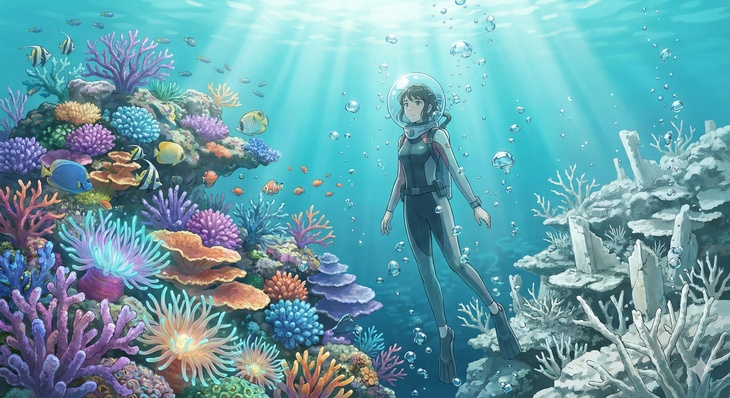
Silent Sighs of the Sea: The Crisis of Coral Bleaching
中文翻譯
珊瑚礁通常被稱為「海洋中的熱帶雨林」,是地球上生物多樣性最豐富且經濟價值最高的生態系統之一。儘管珊瑚礁佔據的海底面積不到百分之一,卻養育了驚人的百分之二十五的海洋生物。然而,這些生機勃勃的水下大都市目前正受到一種稱為「珊瑚白化」現象的生存威脅。當珊瑚受到環境條件變化(如海水溫度升高)的壓力時,會排出身體組織中共生的藻類,導致它們完全變白,這個過程便會發生。大規模白化事件的主要驅動力是與全球氣候變遷相關的前所未有的海洋升溫。珊瑚與一種稱為「蟲黃藻」的微小藻類維持著微妙的互利共生關係,這些藻類透過光合作用為珊瑚提供食物,並賦予它們鮮豔的色彩。當水溫過高時,珊瑚會感到壓力並排斥這些藻類。失去它們後,珊瑚開始飢餓,並變得更容易受到疾病的侵害。雖然珊瑚在白化事件後仍可生存,但長期的熱壓力會導致大規模死亡,造成整個珊瑚礁結構崩解,並使無數海洋物種失去棲息地。
失去珊瑚礁的社會經濟影響同樣深遠。全球有數百萬人依賴健康的珊瑚礁獲取食物、抵禦風暴的海岸保護以及旅遊業收入。為了對抗這種衰退,海洋生物學家正在實驗「輔助進化」,這是一個選擇性培育展現出更高耐熱性珊瑚的過程。此外,建立海洋保護區(MPAs)可以減少過度捕撈和污染等局部壓力因素,讓珊瑚礁有更好的恢復機會。最終,這些「海洋無聲嘆息」的命運取決於我們共同減輕溫室氣體排放並保護我們這顆藍色星球錯綜複雜平衡的能力。
🔑 重點單字 (Vocabulary)
- staggering adj.. 驚人的;令人震驚的
- expel v.. 排出;驅逐
- symbiotic adj.. 共生的
- unprecedented adj.. 前所未有的
- susceptible adj.. 易受影響的;易受感染的
- mortality n.. 死亡率;死亡
- crumble v.. 崩解;碎裂
- profound adj.. 深遠的;深刻的
- mitigate v.. 減輕;緩和
- intricate adj.. 錯綜複雜的
掌握一種語言等於擁有一個新世界
 語言健身房 https://www.langym.com 提供
語言健身房 https://www.langym.com 提供
