
In recent years, 3D printing has revolutionized the way we design and manufacture objects. Also known as additive manufacturing, this technology allows a machine to create solid objects layer by layer from a digital file. Initially used for making simple plastic models, 3D printing has now become accessible to hobbyists, schools, and major industries. While the technological advancements are exciting, they also bring up serious ethical questions that society must face.
On the positive side, 3D printing has incredible potential in the medical field. Doctors can now print custom artificial limbs for patients at a fraction of the cost of traditional methods. There is even research into "bioprinting," which aims to create human organs for transplants. This could save thousands of lives by reducing the waiting time for donors. Additionally, manufacturers can produce parts locally, which cuts down on transportation costs and reduces pollution.
However, the technology also has a dark side. One of the most controversial issues is the printing of weapons. Designs for plastic guns can be downloaded from the internet and printed at home. These weapons are often invisible to metal detectors and are untraceable, making them a nightmare for security agencies. This raises a difficult question: how can governments control the spread of dangerous items when anyone can become a manufacturer in their own living room?
Another ethical concern involves intellectual property. Just as the internet made it easy to share music illegally, 3D printing makes it easy to copy physical products. If a person scans a famous designer's chair and prints it, are they stealing? As the quality of printers improves, protecting the rights of inventors and artists will become much harder.
In conclusion, 3D printing is a powerful tool that offers both great benefits and significant risks. As we continue to develop this technology, we need to establish clear regulations. We must ensure that 3D printing is used to improve human life, not to endanger it.
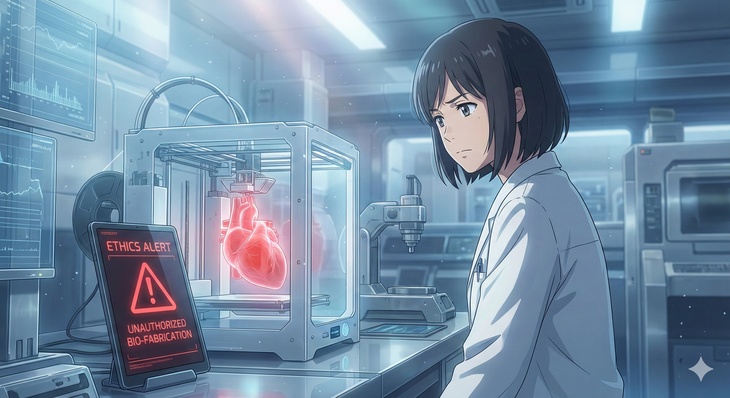
The Rise of 3D Printing and Ethics
中文翻譯
近年來,3D列印徹底徹底改革了我們設計和製造物體的方式。這項技術也稱為積層製造,它允許機器根據數位檔案逐層建立實體物件。3D列印最初用於製作簡單的塑膠模型,現在已普及至業餘愛好者、學校和主要產業。雖然技術進步令人興奮,但也帶來了社會必須面對的嚴重倫理問題。在積極的一面,3D列印在醫療領域具有驚人的潛力。醫生現在可以以傳統方法的一小部分成本為患者列印客製化義肢。甚至還有關於「生物列印」的研究,旨在創造用於移植的人體器官。這可以透過縮短捐贈者的等待時間來挽救數千條生命。此外,製造商可以在當地生產零件,從而降低運輸成本並減少污染。
然而,這項技術也有其陰暗面。最有爭議的問題之一是武器的列印。塑膠槍的設計圖可以從網上下載並在家中列印。這些武器通常無法被金屬探測器發現且難以追踪,這對安全機構來說是一場噩夢。這提出了一個難題:當任何人都可以在自家的客廳成為製造商時,政府該如何控制危險物品的傳播?
另一個倫理擔憂涉及智慧財產權。就像互聯網使非法分享音樂變得容易一樣,3D列印也使複製實體產品變得容易。如果一個人掃描著名設計師的椅子並將其列印出來,他們是在偷竊嗎?隨著印表機品質的提高,保護發明者和藝術家的權利將變得更加困難。
總之,3D列印是一個強大的工具,既提供了巨大的好處,也帶來了重大風險。隨著我們繼續發展這項技術,我們需要建立明確的法規。我們必須確保 3D列印是用於改善人類生活,而不是危及生命。
🔑 重點單字 (Vocabulary)
- revolutionize v.. 徹底改革;使發生劇變
- manufacture v.. 製造;加工
- accessible adj.. 易於得到的;可進入的
- potential n. / adj.. 潛力;潛在的
- limb n.. 肢體(手或腳)
- transplant n. / v.. 移植
- controversial adj.. 有爭議的
- untraceable adj.. 難以追蹤的
- intellectual property n.. 智慧財產權
- regulation n.. 規章;條例
掌握一種語言等於擁有一個新世界
 語言健身房 https://www.langym.com 提供
語言健身房 https://www.langym.com 提供
