
For decades, nanotechnology was a concept largely confined to science fiction novels. Today, however, it has become a driving force in modern industrial production. Defined as the manipulation of matter on an atomic, molecular, and supramolecular scale, nanotechnology is fundamentally changing how we manufacture goods. By controlling materials at such a microscopic level, engineers can enhance the physical properties of products in ways that were previously impossible.
One of the most significant applications of nanotechnology is in the creation of advanced materials. Traditional manufacturing often relies on bulk materials like steel or aluminum. In contrast, nanotechnology allows for the development of carbon nanotubes and graphene, which are incredibly light yet possess a tensile strength far superior to steel. In the automotive and aerospace industries, this means vehicles and aircraft can be built with lighter frames without sacrificing safety. Consequently, these lighter vehicles consume less fuel, leading to substantial cost savings and reduced environmental impact.
Furthermore, the electronics industry has been completely transformed by this technology. As consumers demand faster and smaller devices, manufacturers have turned to nanotechnology to shrink transistors to sizes that are barely visible under a standard microscope. This precision allows computer chips to process information at unprecedented speeds while generating less heat. Without these advancements, the smartphones and powerful laptops we rely on today would simply not exist.
Beyond strength and speed, nanotechnology is introducing a new era of efficiency in chemical processing. Nanoparticles are being used as catalysts to speed up chemical reactions in industrial plants. This not only increases production rates but also minimizes hazardous waste, making the manufacturing process greener.
In conclusion, nanotechnology is not merely a trend; it is a pivotal shift in industrial capability. As research continues, we can expect to see even more innovative applications that will make production cheaper, cleaner, and more efficient. The industrial revolution of the twenty-first century is undoubtedly being built on a microscopic scale.
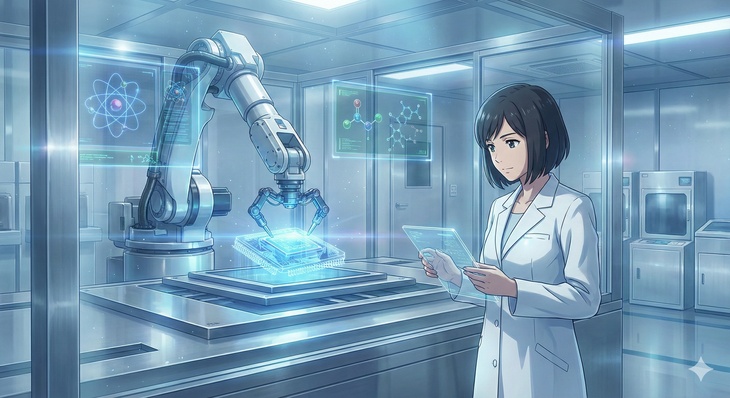
How Nanotechnology is Revolutionizing Industrial Production
中文翻譯
幾十年來,奈米技術主要是一個局限於科幻小說的概念。然而今天,它已成為現代工業生產的驅動力。奈米技術被定義為在原子、分子和超分子尺度上操縱物質,它正在從根本上改變我們製造商品的方式。透過在如此微觀的層面上控制材料,工程師可以用以前不可能的方式增強產品的物理特性。奈米技術最重要的應用之一是創造先進材料。傳統製造通常依賴鋼或鋁等大塊材料。相比之下,奈米技術允許開發碳奈米管和石墨烯,它們非常輕,但抗拉強度遠優於鋼。在汽車和航空航天工業中,這意味著車輛和飛機可以在不犧牲安全性的情況下使用更輕的框架構建。因此,這些更輕的車輛消耗更少的燃料,從而節省大量成本並減少對環境的影響。
此外,電子工業已被這項技術徹底改變。隨著消費者需求更快、更小的設備,製造商已轉向奈米技術,將電晶體縮小到在標準顯微鏡下幾乎看不見的尺寸。這種精確度允許電腦晶片以空前的速度處理訊息,同時產生更少的熱量。沒有這些進步,我們今天依賴的智慧型手機和強大的筆記型電腦根本就不會存在。
除了強度和速度之外,奈米技術正在引入化學加工效率的新時代。奈米粒子被用作催化劑,以加速化工廠的化學反應。這不僅提高了生產率,還最大限度地減少了危險廢物,使製造過程更加環保。
總之,奈米技術不僅僅是一種趨勢;它是工業能力的關鍵轉變。隨著研究的繼續,我們可以期待看到更多創新的應用,使生產更便宜、更清潔、更有效率。二十一世紀的工業革命無疑是建立在微觀尺度上的。
🔑 重點單字 (Vocabulary)
- manipulation n.. 操縱;控制
- molecular adj.. 分子的
- microscopic adj.. 極小的;顯微鏡可見的
- enhance v.. 增強;提升
- tensile strength n.. 抗拉強度
- consequently adv.. 因此;結果
- substantial adj.. 重大的;大量的
- unprecedented adj.. 史無前例的
- catalyst n.. 催化劑
- pivotal adj.. 關鍵的;樞紐的
- capability n.. 能力;性能
- hazardous adj.. 危險的;有害的
掌握一種語言等於擁有一個新世界
 語言健身房 https://www.langym.com 提供
語言健身房 https://www.langym.com 提供
