
The concept of aesthetics our understanding of beauty, taste, and artistic value has historically been shaped by cultural institutions, philosophers, and elite critics. However, the advent of the digital age has precipitated a radical democratization of this domain. Today, the arbiter of taste is no longer the museum curator or the fashion editor, but the algorithm. As we scroll through infinite feeds of curated imagery, our visual sensibilities are being subtly rewired by the mechanics of social media engagement.
One of the most profound shifts is the "flattening" of aesthetic hierarchies. In the digital realm, a masterpiece by Van Gogh competes for attention with a viral meme or a digitally rendered landscape. This saturation of imagery has led to an eclectic, often chaotic, visual culture where high art and pop culture blend seamlessly. While this allows for unprecedented creativity and inclusivity, critics argue that it also fosters a certain homogenization. When algorithms prioritize content that garners the most likes, aesthetic trends tend to converge toward a globally palatable, yet often superficial, "Instagrammable" look.
Furthermore, the rise of generative Artificial Intelligence (AI) challenges the very definition of creativity. Tools that can synthesize complex images in seconds raise philosophical questions about authorship and authenticity. If a machine can replicate the brushstrokes of the Renaissance masters or conceive entirely new artistic paradigms without human intervention, where does the value of art lie? Is it in the technical skill, the emotional intent, or simply the final visual output?
Moreover, the digital age has introduced the concept of "ephemeral aesthetics." Unlike the enduring marble statues of antiquity, much of digital art is transient—designed to be consumed in seconds and then scrolled past. This fleeting nature fundamentally alters how we appreciate beauty; it demands immediate impact rather than prolonged contemplation.
In conclusion, the digital revolution is not merely changing how we view art; it is reshaping the cognitive processes behind our aesthetic judgments. As we navigate this new landscape, we must remain critical consumers of visual culture, ensuring that in our pursuit of digital perfection, we do not lose sight of the messy, imperfect, yet profoundly human elements that constitute true beauty.
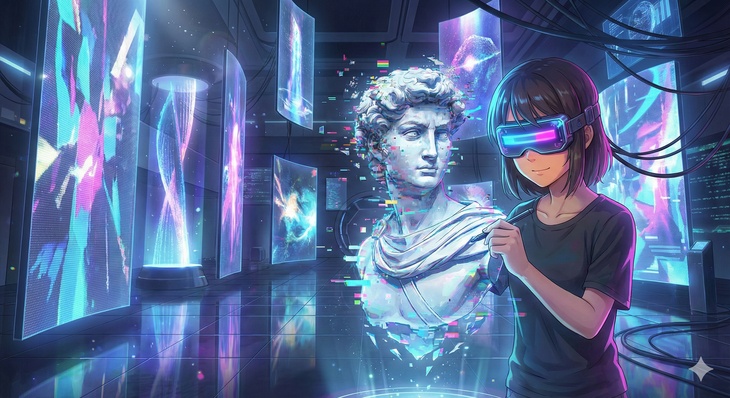
Redefining Aesthetics in the Digital Age
中文翻譯
美學的概念——我們對美、品味和藝術價值的理解——在歷史上一直由文化機構、哲學家和精英評論家所塑造。然而,數位時代的來臨促成了這一領域激進的民主化。今天,品味的仲裁者不再是博物館策展人或時尚編輯,而是演算法。當我們滑過無窮無盡的精選圖像時,我們的視覺感知正被社交媒體互動的機制潛移默化地重新連接。最深刻的轉變之一是美學等級的「扁平化」。在數位領域,梵谷的傑作與病毒式傳播的迷因或數位渲染的風景爭奪注意力。這種圖像的飽和導致了一種折衷的、往往是混亂的視覺文化,高雅藝術和流行文化無縫融合。雖然這允許了前所未有的創造力和包容性,但評論家認為這也助長了某種同質化。當演算法優先考慮獲得最多讚的內容時,美學趨勢往往會趨向於一種全球合意、但往往膚淺的「適合上傳 Instagram」的外觀。
此外,生成式人工智慧 (AI) 的興起挑戰了創造力的定義。能夠在幾秒鐘內合成複雜圖像的工具引發了關於作者身份和真實性的哲學問題。如果機器可以在沒有人類干預的情況下複製文藝復興大師的筆觸或構思全新的藝術範式,那麼藝術的價值何在?是在於技術、情感意圖,還是僅僅在於最終的視覺輸出?
此外,數位時代引入了「短暫美學」的概念。與古代持久的大理石雕像不同,許多數位藝術是短暫的——設計用於在幾秒鐘內被消費然後滑過。這種稍縱即逝的本質從根本上改變了我們欣賞美的方式;它要求立即的衝擊力而不是長時間的凝視。
總之,數位革命不僅僅是在改變我們看待藝術的方式;它正在重塑我們審美判斷背後的認知過程。當我們在這一新景觀中航行時,我們必須保持作為視覺文化的批判性消費者,確保在我們追求數位完美的過程中,不會忽視構成真實之美的混亂、不完美但深刻的人性元素。
🔑 重點單字 (Vocabulary)
- aesthetics n.. 美學;審美觀
- precipitate v.. 促成;加速導致
- democratization n.. 民主化;大眾化
- arbiter n.. 仲裁者;權威人士
- saturation n.. 飽和;浸透
- eclectic adj.. 折衷的;兼收並蓄的
- homogenization n.. 同質化
- palatable adj.. 合意的;可口的
- authenticity n.. 真實性;原創性
- paradigm n.. 範式;典範
- ephemeral adj.. 短暫的;瞬息的
- transient adj.. 稍縱即逝的;暫時的
掌握一種語言等於擁有一個新世界
 語言健身房 https://www.langym.com 提供
語言健身房 https://www.langym.com 提供
