In recent years, the field of robotics has transcended the factory floor, moving into our homes, hospitals, and schools. While early robots were designed primarily for physical tasks lifting heavy objects or assembling cars the new generation focuses on social interaction. These "social robots" are engineered to communicate with humans in natural and intuitive ways, marking a significant shift in how we perceive machines.
One of the most notable advancements is in the area of non-verbal communication. Researchers are developing algorithms that allow robots to recognize and mimic human facial expressions, gestures, and body language. For instance, a robot designed for elderly care can now detect if a user looks sad or confused and adjust its tone of voice accordingly. This ability to interpret emotional cues is crucial for building trust and rapport between humans and machines.
Furthermore, advancements in Natural Language Processing (NLP) have revolutionized verbal communication. Robots can now engage in complex conversations, understanding not just the literal meaning of words but also the underlying context and sentiment. In educational settings, robotic tutors can adapt their teaching style based on a student's responses, offering personalized feedback and encouragement. This interactive capability makes learning more engaging and effective for students of all ages.
However, these developments are not without challenges. The "Uncanny Valley" effect where a robot looks almost, but not exactly, human can cause feelings of unease. To overcome this, many designers are opting for stylized, approachable appearances rather than hyper-realistic ones. Additionally, ethical concerns regarding privacy and the potential for emotional attachment to machines must be carefully addressed.
In conclusion, the integration of advanced communication skills into robotics holds immense potential. As these technologies mature, they will likely play an integral role in healthcare, education, and customer service. By bridging the gap between digital logic and human emotion, social robots are poised to become not just tools, but companions and collaborators in our daily lives.
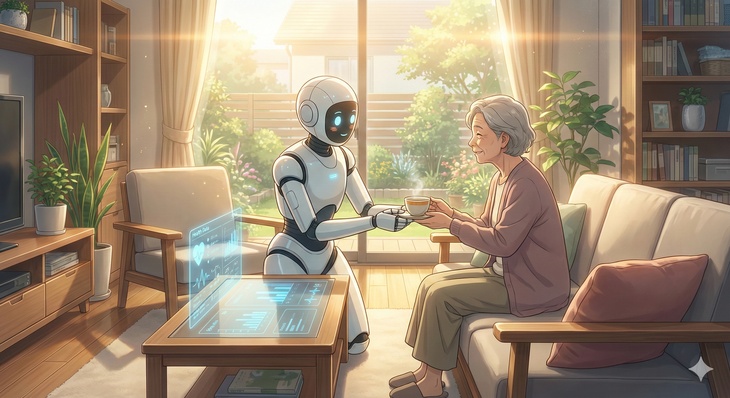
Advancements in Robotics for Human Communication
中文翻譯
近年來,機器人領域已經超越了工廠車間,進入了我們的家庭、醫院和學校。雖然早期的機器人主要是為了物理任務而設計的,例如舉起重物或組裝汽車,但新一代機器人則專注於社交互動。這些「社交機器人」被設計成能以自然和直觀的方式與人類溝通,標誌著我們對機器看法的重大轉變。最顯著的進步之一是在非語言溝通領域。研究人員正在開發演算法,讓機器人能夠識別並模仿人類的面部表情、手勢和肢體語言。例如,專為老年護理設計的機器人現在可以檢測使用者是否看起來悲傷或困惑,並相應地調整其語氣。這種解讀情緒信號的能力對於建立人機之間的信任和融洽關係至關重要。
此外,自然語言處理 (NLP) 的進步徹底改變了語言溝通。機器人現在可以進行複雜的對話,不僅理解字面意義,還能理解潛在的語境和情緒。在教育環境中,機器人導師可以根據學生的反應調整教學風格,提供個性化的反饋和鼓勵。這種互動能力使各個年齡層的學生學習起來更加投入和有效。
然而,這些發展並非沒有挑戰。「恐怖谷」效應,即機器人看起來幾乎像人,但不完全像人,可能會引起不安的感覺。為了克服這一點,許多設計師選擇了風格化、親切的外觀,而不是超寫實的外觀。此外,關於隱私以及可能對機器產生情感依賴的倫理問題也必須謹慎處理。
總之,將先進的溝通技巧整合到機器人技術中具有巨大的潛力。隨著這些技術的成熟,它們將可能在醫療保健、教育和客戶服務中發揮不可或缺的作用。透過縮小數位邏輯與人類情感之間的差距,社交機器人有望不僅成為工具,更成為我們日常生活中的伙伴和合作者。
🔑 重點單字 (Vocabulary)
- transcend v.. 超越;跨越
- intuitive adj.. 直觀的;直覺的
- perceive v.. 感知;看待
- mimic v.. 模仿
- rapport n.. 融洽關係;和諧關係
- revolutionize v.. 徹底改變;改革
- sentiment n.. 情緒;觀點
- capability n.. 能力;性能
- unease n.. 不安;憂慮
- approachable adj.. 親切的;可親近的
- integration n.. 整合;結合
- integral adj.. 不可或缺的;整體的
掌握一種語言等於擁有一個新世界
 語言健身房 https://www.langym.com 提供
語言健身房 https://www.langym.com 提供
