
In a world increasingly driven by the new and the disposable, the art of traditional restoration stands as a defiant guardian of our collective memory. It is a discipline that goes far beyond the mere physical repair of broken objects or dilapidated buildings. Rather, restoration serves as a profound dialogue between the past, the present, and the future, ensuring that the wisdom of our ancestors remains accessible to generations yet to be born.
At its core, restoration is an exercise in empathy and historical detective work. To faithfully restore a Renaissance painting or a Ming Dynasty vase, an artisan must understand not only the materials used such as specific pigments or clays but also the intent and spirit of the original creator. This painstaking process creates a tangible link between eras. When a young restorer touches the brushstrokes laid down centuries ago, they are, in a sense, shaking hands with history. This connection fosters a deep sense of continuity and identity, reminding us that we are part of a larger, unfolding narrative.
Furthermore, the transmission of restoration skills is a vital act of cultural preservation. These techniques are often esoteric, passed down through apprenticeship lineages that rely on tacit knowledge rather than written manuals. If this chain is broken, the knowledge is lost forever, rendering us unable to care for our own heritage. Consequently, the relationship between the master and the apprentice is pivotal. It is in this intimate setting that the values of patience, precision, and respect for authenticity are cultivated.
Moreover, the philosophy behind restoration often challenges modern perceptions of perfection. Practices such as Kintsugi the Japanese art of repairing broken pottery with gold lacquer celebrate the history of an object rather than disguising it. This approach teaches a valuable lesson about resilience: that damage does not signify the end of utility or beauty. Instead, the scars of time can enhance an object's worth.
In conclusion, traditional restoration is indispensable for maintaining the fabric of our civilization. It safeguards our cultural artifacts against the ravages of time while simultaneously educating the youth about their roots. By bridging the gap between generations, restoration ensures that the voices of the past continue to resonate, guiding us toward a more thoughtful and grounded future.
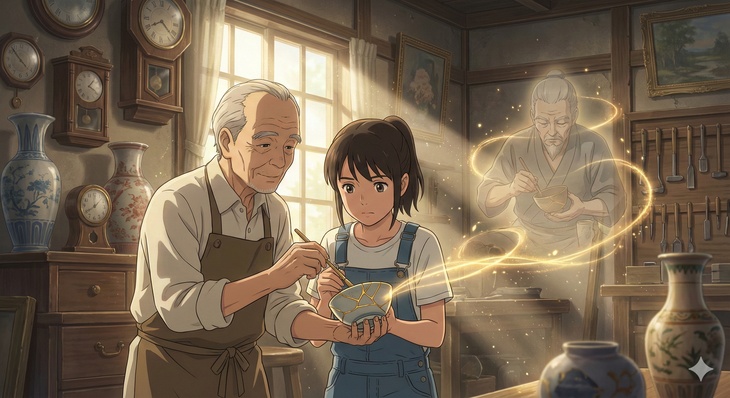
The Role of Traditional Restoration bridging Generations
中文翻譯
在一個日益被新事物和一次性用品驅動的世界裡,傳統修復藝術儼然成為我們集體記憶的堅定守護者。這是一門遠遠超越單純修復破碎物體或破舊建築的學科。相反地,修復充當了過去、現在和未來之間深刻的對話,確保我們祖先的智慧對尚未出生的世代來說仍然是可觸及的。從本質上講,修復是一種同理心和歷史偵探工作的練習。為了忠實地修復一幅文藝復興時期的畫作或一個明朝的花瓶,工匠不僅必須了解所使用的材料,如特定的顏料或黏土,還必須了解原始創作者的意圖和精神。這個煞費苦心的過程創造了時代之間有形的連結。當一位年輕的修復師觸摸幾個世紀前留下的筆觸時,從某種意義上說,他們正在與歷史握手。這種連結培養了深刻的連續性和認同感,提醒我們,我們是更宏大的、正在展開的敘事的一部分。
此外,修復技能的傳承是文化保存的重要行為。這些技術通常是深奧難懂的,透過依賴隱性知識而非書面手冊的學徒世家傳承下來。如果這條鏈條斷裂,知識將永遠消失,使我們無法照料自己的遺產。因此,大師與學徒之間的關係是關鍵的。正是在這種親密的環境中,耐心、精確和對真實性的尊重的價值觀得以培養。
再者,修復背後的哲學往往挑戰現代對完美的看法。諸如「金繼」 日本用金漆修復破碎陶器的藝術,這樣的實踐頌揚了物體的歷史,而不是掩飾它。這種方法教導了關於韌性的寶貴一課:損壞並不意味著效用或美麗的終結。相反,時間的傷痕可以提升物體的價值。
總之,傳統修復對於維護我們文明的結構是不可或缺的。它保護我們的文化文物免受時間的摧殘,同時教育年輕人了解他們的根源。透過連結世代之間的鴻溝,修復確保了過去的聲音繼續迴盪,引導我們走向一個更深思熟慮和腳踏實地的未來。
🔑 重點單字 (Vocabulary)
- painstaking adj.. 煞費苦心的;辛勤的
- continuity n.. 連續性;延續
- esoteric adj.. 深奧難懂的;秘傳的
- pivotal adj.. 關鍵的;樞紐的
- authenticity n.. 真實性;可靠性
- fabric n.. 結構;組織;織物
- dilapidated adj.. 破舊的;荒廢的
- tangible adj.. 有形的;可觸摸的
- resonate v.. 引起共鳴;迴盪
- resilience n.. 韌性;恢復力
- indispensable adj.. 不可或缺的
- safeguard v.. 保護;捍衛
掌握一種語言等於擁有一個新世界
 語言健身房 https://www.langym.com 提供
語言健身房 https://www.langym.com 提供
