
When we think of space exploration, we usually imagine astronauts, giant rockets, and distant planets. It seems like something far away from our normal lives. However, the truth is that space technology is already a big part of our daily routines. The trends in space exploration have brought many surprising benefits to Earth.
First, consider how we travel. Before the invention of the Global Positioning System (GPS), people had to use paper maps to find their way. Today, thanks to satellites orbiting the Earth, we can easily navigate through busy city streets using our smartphones. GPS is not only used for driving but also for tracking packages and even helping airplanes fly safely.
Another major trend is the improvement in weather forecasting. Satellites equipped with advanced cameras take pictures of clouds and storms from space. This information helps scientists predict the weather accurately. Because of this technology, we know when to carry an umbrella or when a dangerous typhoon is approaching, which saves many lives.
Furthermore, many materials we use every day were originally created for space missions. For example, memory foam was invented by NASA to make airplane seats safer and more comfortable for astronauts. Today, it is widely used in our mattresses and pillows to give us a better night's sleep. Water filters are another great example. Astronauts needed clean water in space, so scientists developed powerful filters that we now use in our kitchens.
In recent years, the trend of launching smaller and cheaper satellites has grown. This is making satellite internet more common, bringing fast internet connections to people living in remote areas where traditional cables cannot reach.
In conclusion, space exploration is not just about discovering new stars. It is about creating useful technologies that improve our lives. As scientists continue to explore the universe, we can expect even more amazing inventions to become part of our everyday world.
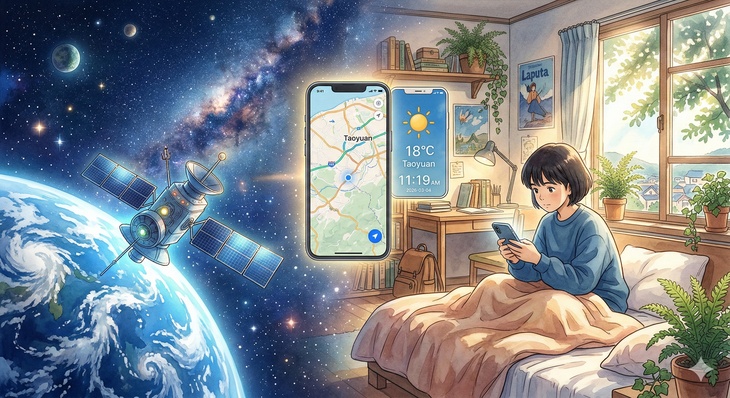
Trends in Space Exploration in Daily Life
中文翻譯
當我們想到太空探索時,我們通常會想像太空人、巨大的火箭和遙遠的行星。這似乎是離我們正常生活很遙遠的事情。然而,事實上太空科技已經成為我們日常生活中很大的一部分。太空探索的趨勢為地球帶來了許多令人驚喜的好處。首先,想想我們如何旅行。在全球定位系統 (GPS) 發明之前,人們必須使用紙本地圖來找路。今天,多虧了繞地球運行的衛星,我們可以使用智慧型手機輕鬆地在繁忙的城市街道中導航。GPS 不僅用於開車,還用於追蹤包裹,甚至幫助飛機安全飛行。
另一個主要趨勢是天氣預報的改進。配備先進相機的衛星從太空拍攝雲層和風暴的照片。這些資訊幫助科學家準確預測天氣。因為這項技術,我們知道何時該帶傘或何時有危險的颱風逼近,這拯救了許多生命。
此外,我們每天使用的許多材料最初都是為了太空任務而創造的。例如,記憶海綿是由美國宇航局 (NASA) 發明的,目的是讓太空人的飛機座椅更安全、更舒適。今天,它被廣泛用於我們的床墊和枕頭中,讓我們有更好的睡眠。濾水器是另一個很好的例子。太空人在太空中需要乾淨的水,所以科學家開發了我們現在在廚房使用的強效過濾器。
近年來,發射更小、更便宜的衛星的趨勢不斷增長。這使得衛星網路變得更加普及,為生活在傳統電纜無法到達的偏遠地區的人們帶來了快速的網路連線。
總之,太空探索不僅僅是為了發現新恆星。它是關於創造改善我們生活的實用技術。隨著科學家繼續探索宇宙,我們可以期待更多令人驚奇的發明成為我們日常生活的一部分。
🔑 重點單字 (Vocabulary)
- exploration n.. 探索;探測
- astronaut n.. 太空人
- routine n.. 日常事務;慣例
- orbit v.. 繞軌道運行
- navigate v.. 導航;航行
- forecast n. / v.. 預報;預測
- accurately adv.. 準確地
- approach v.. 靠近;逼近
- mission n.. 任務
- remote adj.. 偏遠的;遙遠的
- cable n.. 纜線;電纜
- universe n.. 宇宙
掌握一種語言等於擁有一個新世界
 語言健身房 https://www.langym.com 提供
語言健身房 https://www.langym.com 提供
