
The trajectory of automation is no longer a speculative sci-fi concept; it is an inexorable reality reshaping the global economic landscape. While historical discourse often framed automation as a zero-sum game where machines categorically displace human labor contemporary analysts advocate for a more nuanced evaluation. The paradigm is shifting from substitution to augmentation, whereby artificial intelligence (AI) and robotics seamlessly integrate with human cognitive capacities to optimize efficiency and innovation.
However, the proliferation of autonomous systems brings forth multifaceted challenges that demand rigorous scrutiny. Chief among these is the exacerbation of socioeconomic disparities. As routine, algorithmic tasks are increasingly delegated to machines, the labor market is experiencing acute polarization. Highly skilled professionals who can design, manage, and collaborate with AI systems are reaping unprecedented dividends, whereas workers engaged in manual or repetitive labor face systemic marginalization. Consequently, governments must proactively overhaul educational frameworks, prioritizing adaptability, critical thinking, and digital literacy to equip the future workforce for this non-linear transition.
Furthermore, the deployment of autonomous technologies necessitates the establishment of robust ethical and regulatory guardrails. In critical sectors such as healthcare, finance, and autonomous transportation, the delegation of decision-making authority to algorithms raises profound liability issues. If an AI-driven medical diagnostic tool misdiagnoses a patient, or an autonomous vehicle causes a fatal collision, determining culpability becomes a labyrinthine legal dilemma. Thus, evaluating automation entails not merely calculating productivity gains but also codifying human-centric principles into machine learning models to prevent algorithmic biases.
In conclusion, the advent of pervasive automation is neither a utopian panacea nor a dystopian catastrophe. It is an evolutionary crucible that will test our societal resilience and moral compass. To harness its full potential, stakeholders must transcend technological determinism and actively architect a future where automation serves as a catalyst for inclusive prosperity rather than a mechanism for widespread disenfranchisement.
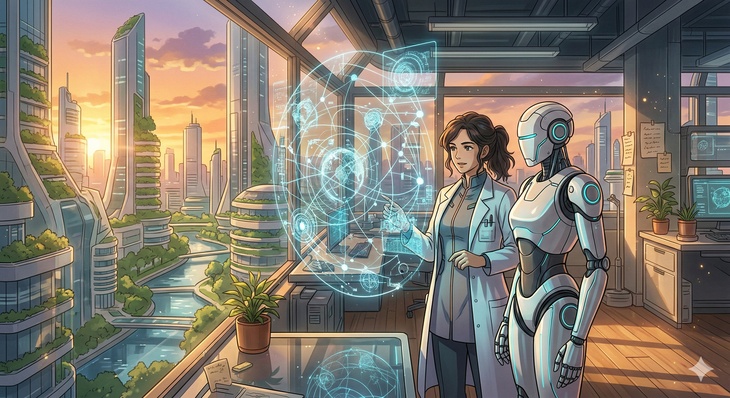
Evaluating Automation in the Future
中文翻譯
自動化的發展軌跡已不再是推測性的科幻概念;它是一個不可阻擋的現實,正在重塑全球經濟格局。雖然歷史論述經常將自動化定義為一場零和遊戲,即機器絕對會取代人類勞動力,但當代分析師提倡進行更細微的評估。目前的典範正從「替代」轉向「擴增」,藉此人工智慧(AI)和機器人技術能與人類的認知能力無縫整合,以優化效率和創新。然而,自主系統的激增帶來了多方面的挑戰,需要進行嚴格的審查。其中最主要的是社會經濟差距的加劇。隨著常規、演算法式的任務日益委派給機器,勞動市場正經歷劇烈的兩極化。能夠設計、管理並與 AI 系統協作的高技能專業人員正獲得史無前例的紅利,而從事體力或重複性勞動的工人則面臨系統性的邊緣化。因此,各國政府必須積極主動地徹底改革教育框架,優先培養適應力、批判性思維和數位素養,為未來的勞動力應對這種非線性轉型做好準備。
此外,自主技術的部署需要建立健全的倫理和監管護欄。在醫療保健、金融和自動駕駛交通等關鍵領域,將決策權下放給演算法引發了深遠的責任歸屬問題。如果人工智慧驅動的醫療診斷工具對患者誤診,或者自動駕駛汽車造成致命碰撞,確定罪責將變成一個錯綜複雜的法律困境。因此,評估自動化不僅需要計算生產力的提升,還需要將以人為本的原則編入機器學習模型中,以防止演算法偏見。
總之,無所不在的自動化的到來,既不是烏托邦式的萬靈丹,也不是反烏托邦式的災難。這是一個演化的考驗,將考驗我們社會的韌性和道德指南針。為了發揮其全部潛力,利益相關者必須超越技術決定論,積極構建一個未來:讓自動化成為包容性繁榮的催化劑,而不是廣泛剝奪權利的機制。
🔑 重點單字 (Vocabulary)
- inexorable adj.. 不可阻擋的;無情的
- augmentation n.. 擴增;增加
- proliferation n.. 激增;擴散
- scrutiny n.. 仔細審查;監督
- exacerbation n.. 惡化;加劇
- polarization n.. 兩極化
- marginalization n.. 邊緣化
- proactively adv.. 積極主動地
- culpability n.. 罪責;有罪
- labyrinthine adj.. 迷宮般的;錯綜複雜的
- panacea n.. 萬靈丹
- disenfranchisement n.. 剝奪權利 (尤指公民權或經濟參與權)
掌握一種語言等於擁有一個新世界
 語言健身房 https://www.langym.com 提供
語言健身房 https://www.langym.com 提供
