
Silk is a very beautiful and soft material. People use it to make dresses, shirts, and ties. But do you know where silk comes from? The story of silk is very old and interesting.
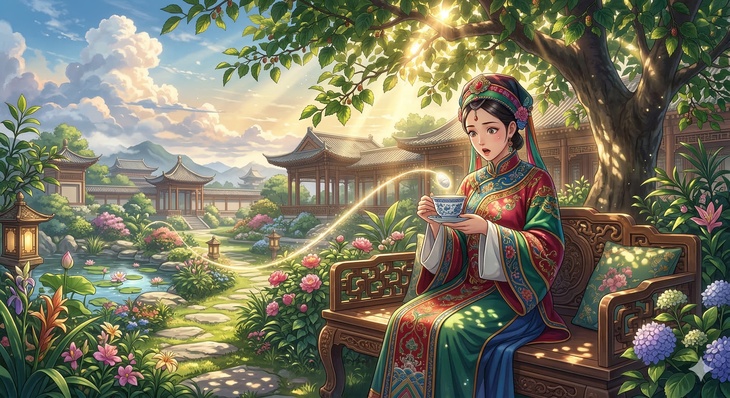
Long ago, in ancient China, a queen named Leizu discovered silk. One day, she was drinking hot tea under a big tree. Suddenly, a small, white cocoon fell into her teacup. The hot water made the cocoon soft. Leizu pulled a long, shiny thread from the cocoon. This was the first silk thread. She found out that the cocoon came from a special bug called a silkworm.
For a long time, only people in China knew how to make silk. The Chinese kept it a big secret for thousands of years. Anyone who told the secret to other countries would be punished. Because silk was so beautiful, people from other countries wanted to buy it very much. They paid a lot of gold and silver for Chinese silk.
To sell silk to faraway places, people traveled on a long path. This path was called the Silk Road. Traders rode camels and walked for many months to reach Europe and other parts of Asia. Along the way, they didn't just buy and sell things. They also shared ideas, food, and culture with different people.
Today, making silk is not a secret anymore. Many countries can make it now. However, people still remember the story of the Chinese queen and her cup of tea. Silk is still a symbol of beauty and culture all over the world.
The History of Silk
中文翻譯
絲綢是一種非常美麗且柔軟的材料。人們用它來製作洋裝、襯衫和領帶。但你知道絲綢從哪裡來嗎?絲綢的故事非常古老且有趣。很久以前,在古代中國,一位名叫嫘祖的皇后發現了絲綢。有一天,她在一棵大樹下喝熱茶。突然,一個小白繭掉進了她的茶杯裡。熱水讓繭變軟了。嫘祖從繭裡拉出一根長長、閃亮的線。這就是第一根絲線。她發現這個繭來自一種叫做蠶的特殊蟲子。
很長一段時間,只有中國人知道如何製作絲綢。幾千年來,中國人將其視為一個大秘密。任何將這個秘密告訴其他國家的人都會受到懲罰。因為絲綢太美了,其他國家的人都非常想買。他們用大量的金銀來購買中國的絲綢。
為了將絲綢賣到遙遠的地方,人們在一條長長的道路上旅行。這條路被稱為絲綢之路。商人騎著駱駝,步行好幾個月才到達歐洲和亞洲其他地區。在沿途,他們不僅買賣東西。他們也與不同的人分享了思想、食物和文化。
今天,製作絲綢不再是秘密。現在許多國家都能製作。然而,人們仍然記得這位中國皇后和她那杯茶的故事。絲綢在世界各地仍然是美麗和文化的象徵。
🔑 重點單字 (Vocabulary)
- material n.. 材料;布料
- ancient adj.. 古代的
- discover v.. 發現
- suddenly adv.. 突然地
- thread n.. 線
- secret n.. 秘密
- punish v.. 懲罰
- trader n.. 商人
- reach v.. 到達;抵達
- symbol n.. 象徵
掌握一種語言等於擁有一個新世界
 語言健身房 https://www.langym.com 提供
語言健身房 https://www.langym.com 提供
