
In the contemporary epoch of globalization, the intersection of cultural diversity and personal identity has emerged as a poignant theme in artistic discourse. Rather than serving as a source of societal fragmentation, the exploration of multifaceted cultural heritages is increasingly acting as a vital conduit bridging the pervasive generational divide.
For older generations, cultural identity was frequently inextricably linked to geographical origins and rigid, time-honored traditions. Artistic expressions—ranging from classical literature and folklore to indigenous craftsmanship—served primarily as vessels for preserving a relatively homogenous historical narrative. They provided a sense of continuity in a world that was moving at a slower, more predictable pace. However, the relentless tide of diaspora, migration, and digital connectivity has irrevocably altered this cultural landscape.
Conversely, contemporary youth navigate an intricate mosaic of cultural influences. Their concept of identity is rarely monolithic; instead, it is a fluid, dynamic amalgamation of ancestral heritage and globalized modernity. This eclectic approach is vividly manifested in the contemporary art scene. Young creators frequently juxtapose traditional motifs with avant-garde mediums, such as augmented reality or electronic music, creating hybrid masterpieces. These works honor the sacrifices of their forebears while simultaneously interrogating complex modern socio-political realities.
Crucially, this artistic synthesis facilitates a profound intergenerational dialogue. When an older artisan observes a young creator recontextualizing a centuries-old weaving technique or a traditional dialect into a digital format, it transcends mere artistic evolution. It represents a mutual acknowledgment of resilience and adaptation. The younger generation validates the historical struggles and wisdom embedded in their heritage, while the elders witness the enduring, dynamic relevance of their legacy in a rapidly transforming world.
Ultimately, navigating the nexus of diversity and identity is not about erasing the past or forcefully assimilating into a homogenized present. It is about constructing a resilient, shared cultural continuum. Through the universal and transformative language of art, diverse identities become the very mortar that solidifies the bridge between ancestors and descendants, ensuring that cultural history is not merely preserved in archives, but vibrantly and continuously lived.
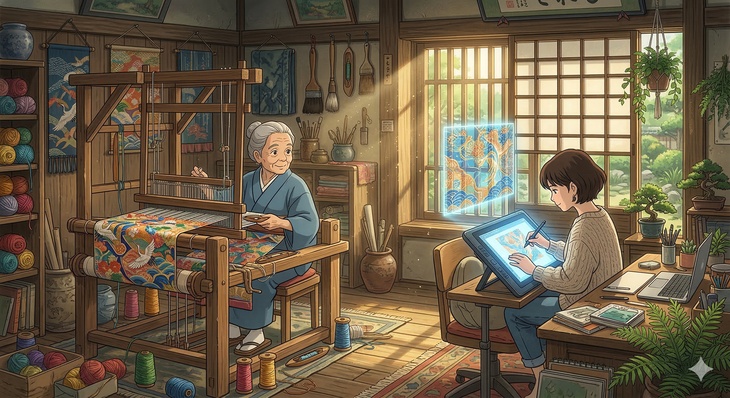
Diversity and Identity bridging Generations
中文翻譯
在當代全球化的時代,文化多元性與個人認同的交會已成為藝術論述中一個引人深思的主題。對多面向文化遺產的探索,不僅沒有成為社會破碎化的根源,反而日益成為跨越普遍世代鴻溝的重要管道。對於老一輩而言,文化認同通常與地理起源和僵化、歷史悠久的傳統密不可分。從古典文學、民間傳說到原住民工藝的藝術表現,主要作為保存相對同質化歷史敘事的載體。在一個步伐較慢、更可預測的世界中,它們提供了一種延續感。然而,海外離散、移民和數位連結的無情浪潮已不可逆地改變了這個文化版圖。
相反地,當代青年在錯綜複雜的文化影響拼圖中摸索。他們的認同概念罕見是單一的;相反地,它是祖先遺產與全球化現代性的一種流動、動態的融合。這種折衷的方法生動地體現在當代藝術界。年輕創作者經常將傳統圖騰與前衛的媒介(如擴增實境或電子音樂)並置,創造出混合的傑作。這些作品在向祖先的犧牲致敬的同時,也審視了複雜的現代社會政治現實。
至關重要的是,這種藝術融合促進了深刻的跨世代對話。當一位年長的工匠觀察到年輕創作者將具有數百年歷史的編織技術或傳統方言重新置入數位格式時,這超越了單純的藝術演進。它代表了對韌性與適應力的相互承認。年輕一代認可了其遺產中蘊含的歷史鬥爭與智慧,而長者則見證了他們的遺產在快速轉變的世界中持久且充滿活力的相關性。
最終,在多元與認同的交匯點上航行,並不是要抹殺過去,也不是要強行同化為一個同質化的現在。它是關於建構一個具有韌性、共享的文化連續體。透過藝術這種普遍且具變革性的語言,多元的認同成為了鞏固祖先與後代之間橋樑的灰泥,確保文化歷史不僅僅被保存在檔案中,而是生機勃勃且持續地被生活著。
🔑 重點單字 (Vocabulary)
- poignant adj.. 引起深思的;令人感傷的
- fragmentation n.. 破碎;分裂
- conduit n.. 管道;溝通橋樑
- inextricably adv.. 密不可分地
- diaspora n.. 離散;移居海外者
- monolithic adj.. 單一的;龐大而僵化的
- amalgamation n.. 融合;混合
- juxtapose v.. 將...並置(以進行對比)
- avant-garde adj.. 前衛的
- resilience n.. 韌性;恢復力
- continuum n.. 連續體
- assimilate v.. 同化;吸收
掌握一種語言等於擁有一個新世界
 語言健身房 https://www.langym.com 提供
語言健身房 https://www.langym.com 提供
