
Historically, the medical establishment often treated the mind and the body as distinct, non-overlapping entities. However, contemporary medical paradigms have unequivocally debunked this dichotomy, emphasizing a more holistic approach to human well-being. Today, the integration of mental healthcare is recognized not merely as an accessory to physical health, but as a fundamental prerequisite for it. As the pervasive impacts of chronic stress and anxiety become increasingly apparent, prioritizing psychological equilibrium is essential for achieving overall health.
The intricate psychosomatic connection dictates that mental distress often manifests as physiological pathology. Prolonged exposure to stress triggers an overproduction of cortisol, a hormone that, in excess, can wreak havoc on the body’s immune and cardiovascular systems. Consequently, individuals grappling with unmitigated anxiety or depression are statistically more susceptible to hypertension, gastrointestinal disorders, and a compromised ability to fight off infections. Therefore, mental healthcare interventions, ranging from psychotherapy to mindfulness practices, serve a dual purpose: they alleviate psychological suffering while simultaneously mitigating the risk of somatic diseases.
Furthermore, the contemporary approach to mental healthcare is transitioning from a reactive model to a proactive one. Rather than waiting for a psychological crisis to precipitate physical decline, medical professionals advocate for preventive cognitive maintenance. Modalities such as Cognitive Behavioral Therapy (CBT) equip individuals with the psychological resilience necessary to navigate life's inevitable adversities. By dismantling maladaptive thought patterns, individuals can prevent the physiological cascade of stress before it inflicts lasting damage.
Despite the overwhelming empirical evidence supporting this holistic integration, systemic barriers and lingering societal stigmas often deter individuals from seeking the psychological support they desperately need. It is imperative that healthcare systems evolve to dismantle these barriers, making mental healthcare as accessible and normalized as routine physical check-ups.
In conclusion, the pursuit of optimal health is an endeavor that must transcend the purely physical domain. Mental healthcare is the linchpin that sustains our physiological vitality. By cultivating our psychological resilience and treating mental well-being with the utmost gravity, we pave the way for a more robust, fulfilling, and genuinely healthy life.
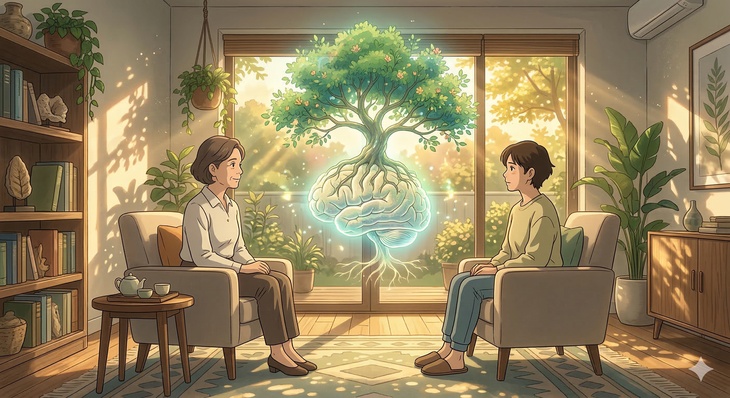
The Mental Healthcare for Better Health
中文翻譯
在歷史上,醫學界通常將心靈與身體視為獨立、不重疊的實體。然而,當代醫學範式已明確地打破了這種二分法,強調對人類福祉採取更全人(整體)的方法。如今,心理健康保健的整合不再僅僅被視為身體健康的附屬品,而是其根本的先決條件。隨著慢性壓力和焦慮的普遍影響變得日益明顯,優先考慮心理平衡對於實現整體健康至關重要。錯綜複雜的身心連結表明,心理困擾經常表現為生理病理。長期處於壓力下會引發皮質醇過度分泌,這種荷爾蒙一旦過量,就會對人體的免疫和心血管系統造成嚴重破壞。因此,與未減輕的焦慮或憂鬱搏鬥的個體,在統計上更容易患上高血壓、腸胃疾病,且抵抗感染的能力也會受損。因此,從心理治療到正念練習等心理健康介入措施具有雙重目的:它們在減輕心理痛苦的同時,也降低了罹患軀體疾病的風險。
此外,當代心理健康保健的方法正從被動反應模式轉向主動預防模式。醫療專業人員不再等待心理危機促成身體衰退,而是提倡預防性的認知維護。例如認知行為療法 (CBT) 等模式,為個人提供了駕馭生活中不可避免的逆境所需的心理韌性。透過瓦解適應不良的思維模式,個人可以在壓力對生理造成持久損害之前,阻止其引發的連鎖反應。
儘管有壓倒性的實證證據支持這種全人整合,系統性障礙和揮之不去的社會污名往往阻礙人們尋求他們極度需要的心理支持。醫療保健系統必須進化以消除這些障礙,使心理健康保健變得與常規身體檢查一樣容易獲得且常態化,這是至關重要的。
總之,追求最佳健康是一項必須超越純粹生理領域的努力。心理健康保健是維持我們生理活力的關鍵樞紐。透過培養我們的心理韌性並以極度的重視對待心理健康,我們為更強健、更充實、真正健康的生活鋪平了道路。
🔑 重點單字 (Vocabulary)
- dichotomy n.. 二分法;對立
- prerequisite n.. 先決條件;前提
- pervasive adj.. 普遍的;瀰漫的
- psychosomatic adj.. 身心失調的;由心理引起的
- pathology n.. 病理;病狀
- unmitigated adj.. 未減輕的;十足的
- somatic adj.. 身體的;軀體的
- precipitate v.. 促成;使提前發生
- maladaptive adj.. 適應不良的
- linchpin n.. 關鍵;樞紐
- imperative adj.. 極重要的;必須的
- resilience n.. 韌性;恢復力
掌握一種語言等於擁有一個新世界
 語言健身房 https://www.langym.com 提供
語言健身房 https://www.langym.com 提供
