
The transition toward a sustainable future is no longer just a theoretical concept discussed in scientific conferences; it is rapidly becoming a tangible reality. The integration of renewable energy into daily life represents a pivotal shift in how we generate, distribute, and consume power. As the detrimental effects of climate change become increasingly apparent, moving away from conventional fossil fuels has become an urgent global imperative.
One of the most visible signs of this transition is the proliferation of solar panels on residential rooftops. Advances in photovoltaic technology have made solar power more efficient and economically viable for average homeowners. By harnessing the sun's energy, households can significantly reduce their reliance on the traditional power grid and lower their electricity bills. Furthermore, excess energy generated during peak sunlight hours can often be fed back into the grid, creating a decentralized energy production model.
Another crucial aspect of this integration is the widespread adoption of electric vehicles (EVs). As charging infrastructure expands and battery technology improves, EVs are replacing internal combustion engine cars at an unprecedented rate. When these vehicles are charged using renewable energy sources, such as wind or solar power, their carbon footprint is drastically minimized.
However, the seamless incorporation of renewables is not without its challenges. Unlike coal or natural gas, renewable sources like wind and solar are inherently intermittent; the wind does not always blow, and the sun does not always shine. To mitigate these fluctuations, the development of smart grids and high-capacity energy storage systems is essential. Smart grids use artificial intelligence to balance supply and demand in real-time, ensuring a stable and reliable flow of electricity.
Ultimately, the successful integration of renewable energy into our daily routines requires a multifaceted approach. It demands continued technological innovation, supportive government policies, and a shift in consumer behavior. By embracing these changes, we can pave the way for a cleaner, more resilient energy future.
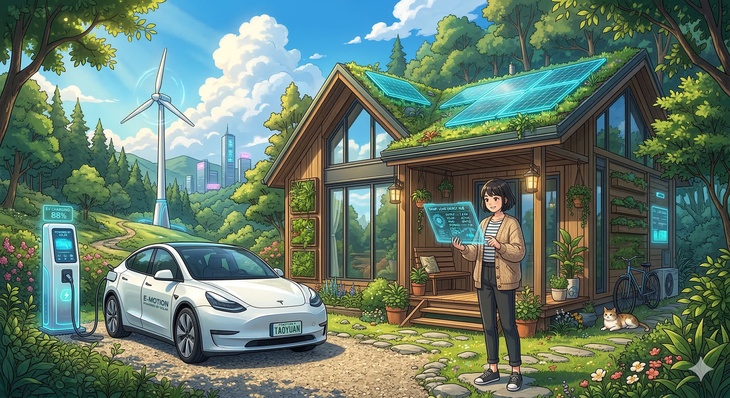
The Integration of Renewable Energy into Daily Life
中文翻譯
邁向永續未來的過渡階段不再只是科學會議上討論的理論概念;它正迅速成為具體的現實。將再生能源融入日常生活,代表了我們在生產、分配和消耗電力方式上的一次關鍵轉變。隨著氣候變遷的有害影響變得日益明顯,擺脫傳統化石燃料已成為全球迫切的當務之急。這種轉變最顯著的標誌之一是住宅屋頂上太陽能板的普及。光電技術的進步使太陽能對一般屋主來說變得更有效率且在經濟上更具可行性。透過利用太陽能,家庭可以大幅減少對傳統電網的依賴並降低電費。此外,在日照高峰期產生的多餘電能通常可以回饋到電網中,從而建立一個去中心化的能源生產模式。
這種融合的另一個重要面向是電動車(EVs)的廣泛採用。隨著充電基礎設施的擴展和電池技術的改進,電動車正以史無前例的速度取代內燃機汽車。當這些車輛使用風能或太陽能等再生能源充電時,它們的碳足跡就能被大幅降至最低。
然而,再生能源的無縫整合並非沒有挑戰。與煤炭或天然氣不同,風能和太陽能等再生能源天生具有間歇性;風不會總是吹,太陽也不會總是照耀。為了減輕這些波動,開發智慧電網和高容量儲能系統是不可或缺的。智慧電網利用人工智慧即時平衡供需,確保電力流動穩定可靠。
最終,將再生能源成功融入我們的日常生活中需要多管齊下的方法。這需要持續的技術創新、支持性的政府政策,以及消費者行為的轉變。透過擁抱這些改變,我們可以為一個更乾淨、更具韌性的能源未來鋪路。
🔑 重點單字 (Vocabulary)
- integration n.. 整合;融入
- sustainable adj.. 永續的;能長期維持的
- conventional adj.. 傳統的;常規的
- imperative n.. 當務之急;極重要的事
- viable adj.. 可行的;能存活的
- harness v.. 利用;控制(能量等)
- infrastructure n.. 基礎設施
- inherently adv.. 固有的;天生地
- mitigate v.. 減輕;緩和
- resilient adj.. 有韌性的;適應力強的
掌握一種語言等於擁有一個新世界
 語言健身房 https://www.langym.com 提供
語言健身房 https://www.langym.com 提供
