
For many decades, computers have changed the way we live, work, and communicate. Most traditional computers, like the ones we use at home or in our smartphones, use "bits" to process information. A bit can only be a 0 or a 1. However, scientists have realized that traditional computers have limits. To solve the world's most difficult problems, they needed to invent something entirely new. This led to the creation of quantum computers.
The history of quantum computing actually began in the early 1980s. At that time, a famous scientist named Richard Feynman noticed a big problem. He said that normal computers could not fully understand the real rules of nature because nature is incredibly complex. He suggested that if we want to copy nature, we must build a computer based on quantum physics. In 1985, another scientist, David Deutsch, proved that such a machine could be built in theory.
But how is a quantum computer different? Instead of using bits, a quantum computer uses "qubits." Because of the special rules of quantum physics, a qubit can be a 0, a 1, or both at the very same time. This amazing ability is called "superposition." It allows quantum computers to process a huge amount of information at the same time. Problems that would take a traditional computer a million years to solve might be finished by a quantum computer in just a few minutes.
In the late 1990s, scientists successfully built the first basic quantum computers. Although these early machines were very small and made many mistakes, they proved that the theory was possible. Over the last twenty years, major technology companies and universities have spent billions of dollars to improve them.
Looking toward the future, quantum computing will likely change our society completely. It could help doctors invent new medicines quickly, help scientists predict extreme weather, and keep our private digital information safe from hackers. Although there are still many challenges to overcome before quantum computers become perfect, their continued development holds the key to an exciting future.
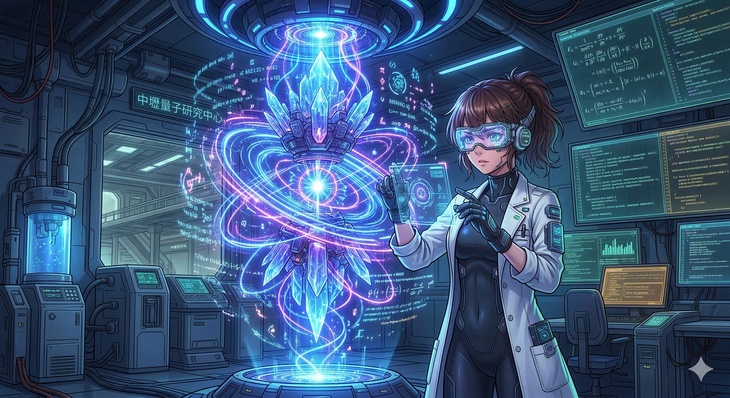
The History of Quantum Computing for the Future
中文翻譯
數十年來,電腦改變了我們生活、工作與溝通的方式。多數傳統電腦(例如我們在家裡或智慧型手機中使用的電腦)使用「位元」來處理資訊。一個位元只能是 0 或 1。然而,科學家們意識到傳統電腦有其極限。為了解決世界上最困難的問題,他們必須發明全新的東西。這促成了量子電腦的誕生。量子運算的歷史實際上始於 1980 年代初期。當時,一位名叫理查·費曼(Richard Feynman)的著名科學家注意到一個大問題。他說,普通的電腦無法完全理解大自然真正的法則,因為大自然實在太複雜了。他建議,如果我們想要模擬大自然,就必須建造一台基於量子物理學的電腦。1985 年,另一位科學家大衛·多伊奇(David Deutsch)證明了這種機器在理論上是可以被建造出來的。
但是,量子電腦有何不同?量子電腦不使用位元,而是使用「量子位元」(qubits)。由於量子物理的特殊法則,一個量子位元可以同時是 0、1,或者兩者皆是。這種驚人的能力被稱為「疊加狀態」(superposition)。這使得量子電腦能夠同時處理極大量的資訊。傳統電腦需要一百萬年才能解決的問題,量子電腦可能只需幾分鐘就能完成。
在 1990 年代末期,科學家成功建造了第一批基本的量子電腦。雖然這些早期的機器非常小且容易出錯,但它們證明了這項理論是可行的。在過去的二十年裡,各大科技公司和大學花費了數十億美元來改進它們。
展望未來,量子運算很可能會徹底改變我們的社會。它可以幫助醫生快速發明新藥物、幫助科學家預測極端天氣,並保護我們的私人數位資訊免受駭客攻擊。儘管在量子電腦臻於完美之前,還有許多挑戰需要克服,但它們持續的發展是通往令人興奮的未來的關鍵。
🔑 重點單字 (Vocabulary)
- traditional adj.. 傳統的
- process v.. 處理;加工
- invent v.. 發明;創造
- entirely adv.. 完全地;徹底地
- complex adj.. 複雜的
- theory n.. 理論;學說
- ability n.. 能力
- successfully adv.. 成功地
- predict v.. 預測;預報
- overcome v.. 克服;戰勝
掌握一種語言等於擁有一個新世界
 語言健身房 https://www.langym.com 提供
語言健身房 https://www.langym.com 提供
