
The global impetus toward a paradigm shift in energy production, away from fossil fuels and toward renewables, is undeniable. Yet, this necessary green transition is riddled with complex, often unforeseen, impediments that collectively form a significant paradox. While the raison for existence of green energy is to ensure ecological stewardship and mitigate climate change, the very construction and deployment of renewable infrastructure often entail environmental and social costs that are difficult to reconcile.
The most salient issue is the vast land footprint required for solar and wind farms. Gigantic solar arrays and expansive wind installations necessitate occupying substantial tracts of land, frequently in rural or ecologically sensitive areas. This leads to contentious land-use conflicts, threatening biodiversity and displacing local communities, whose reliance on traditional livelihoods is often overlooked in the fervor of national energy goals. Moreover, the raw materials essential for these technologies rare earth elements, lithium, and cobalt are often sourced through mining operations that cause extensive habitat destruction and human rights quagmires in developing nations.
Another critical challenge lies in the intermittency of solar and wind power. Their generation is contingent upon weather conditions, creating significant grid instability. This necessitates the development of sophisticated, large-scale energy storage solutions, which, in turn, introduce new technological and resource-intensive hurdles. The promise of a fully decarbonized energy system is thus contingent not just on further technological leaps but also on a more equitable and globally coordinated approach to resource allocation and waste management. Ultimately, navigating this paradox requires a pragmatic acknowledgment that the pursuit of sustainability must be sustainable in every sense environmentally, socially, and economically.
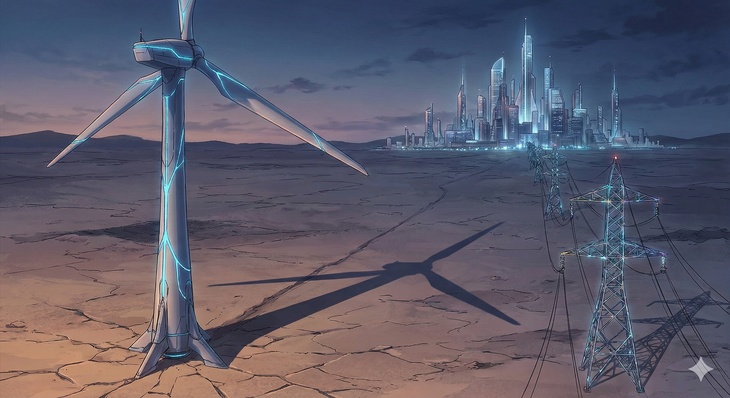
The Paradox of Renewable Energy: Challenges in the Green Transition
中文翻譯
全球能源生產從化石燃料轉向再生能源的典範轉移的推動力是毋庸置疑的。然而,這項必要的綠色轉型卻充滿了複雜、往往難以預見的障礙,共同構成了一個重大的悖論。儘管綠色能源的主要目的是確保生態管理並減緩氣候變遷,但再生能源基礎設施本身的建設和部署往往帶來難以調和的環境和社會成本。最突出的問題是太陽能和風電場所需的巨大土地足跡。龐大的太陽能陣列和大規模的風力設施需要佔用大量土地,這些土地往往位於農村或生態敏感地區。這導致了有爭議的土地使用衝突,威脅到生物多樣性並迫使當地社區遷移,而他們對傳統生計的依賴在國家能源目標的熱切追求中常常被忽視。此外,這些技術所需的關鍵原材料稀土元素、鋰和鈷通常是透過採礦作業獲得的,這些作業在發展中國家造成了廣泛的棲地破壞和人權困境。
另一個關鍵挑戰在於太陽能和風能的間歇性。它們的發電取決於天氣條件,造成了顯著的電網不穩定性。這就要求開發複雜、大規模的儲能解決方案,而這反過來又帶來了新的技術和資源密集型難題。因此,一個完全脫碳的能源系統的承諾不僅取決於進一步的技術飛躍,還取決於一種對資源分配和廢棄物管理更公平、全球協調性更高的方法。最終,駕馭這個悖論需要務實地承認,對永續性的追求本身必須在各方面都是永續的環境上、社會上和經濟上。
🔑 重點單字 (Vocabulary)
- paradigm shift n.. 典範轉移;根本性的改變
- impetus n.. 推動力;刺激
- impediment n.. 障礙;阻礙
- raison for existence n.. 存在的理由;主要目的
- ecological stewardship n.. 生態管理;環境管家職責
- reconcile v.. 調和;使一致
- land footprint n.. 土地足跡;佔地面積
- contentious adj.. 有爭議的;引起爭論的
- fervor n.. 熱切;熱情
- quagmire n.. 困境;泥淖
- intermittency n.. 間歇性
- contingent adj.. 取決於...的;依情況而定的
- equitable adj.. 公平的;公正的
掌握一種語言等於擁有一個新世界
 語言健身房 https://www.langym.com 提供
語言健身房 https://www.langym.com 提供
