
For decades, the architecture of modern computers has relied on the von Neumann model, which separates processing from memory. While this design has powered the digital age, it faces a significant bottleneck when handling the massive, unstructured datasets required for advanced artificial intelligence. In response, scientists are pivoting toward neuromorphic computing, a revolutionary approach that seeks to emulate the neural structure and operation of the human brain.
Unlike traditional silicon chips that execute instructions linearly, neuromorphic hardware consists of artificial neurons and synapses. This allows for parallel processing, meaning the system can handle multiple streams of data simultaneously, much like how we perceive sight and sound at the same time. One of the most compelling advantages of this technology is its extreme energy efficiency. The human brain, capable of performing quadrillions of operations per second, consumes about as much power as a dim lightbulb. By replicating this biological efficiency, neuromorphic systems could potentially run complex AI models on mobile devices without draining their batteries instantly.
However, the transition is not without hurdles. Programming for neuromorphic systems requires a fundamental shift in software development, moving away from traditional logic toward "spiking neural networks" that communicate through discrete electrical pulses. Despite these challenges, the potential applications are staggering. From autonomous drones that can navigate complex environments in real-time to personalized medical sensors that detect heart irregularities with pinpoint accuracy, neuromorphic computing is poised to redefine the limits of machine intelligence. As we stand on the threshold of this new era, the line between biological brilliance and silicon innovation continues to blur.
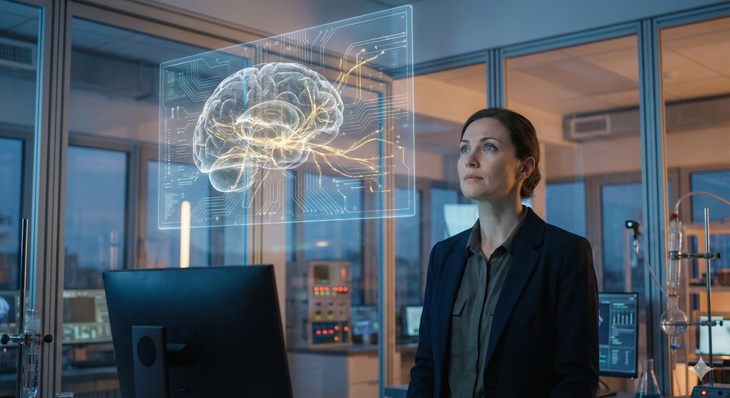
The Dawn of Neuromorphic Computing: Mimicking the Human Brain
中文翻譯
數十年來,現代電腦的架構一直依賴馮·紐曼模型,該模型將處理程序與記憶體分開。雖然這種設計推動了數位時代,但在處理先進人工智慧所需的大量非結構化數據時,它面臨著顯著的瓶頸。作為回應,科學家正轉向「神經型態運算」,這是一種試圖模仿人類大腦神經結構和運作方式的革命性方法。與線性執行指令的傳統矽晶片不同,神經型態硬體由人工神經元和突觸組成。這允許「平行處理」,意味著系統可以同時處理多個數據流,就像我們同時感知視覺和聽覺一樣。這項技術最引人注目的優點之一是其極高的能源效率。人類大腦每秒能執行千萬億次運算,但耗電量僅相當於一個微弱的燈泡。透過複製這種生物效率,神經型態系統潛在於行動裝置上運行複雜的人工智慧模型,而不會瞬間耗盡電池。
然而,這一轉變並非沒有障礙。為神經型態系統編寫程式需要軟體開發的根本轉變,從傳統邏輯轉向透過離散電脈衝通訊的「脈衝神經網路」。儘管存在這些挑戰,其潛在應用仍令人驚嘆。從能即時導航複雜環境的自主無人機,到能以精確精度檢測心臟異常的個性化醫療傳感器,神經型態運算正準備重新定義機器智能的極限。當我們站在這個新時代的門檻上時,生物才智與矽創新之間的界線正持續模糊。
🔑 重點單字 (Vocabulary)
- bottleneck n.. 瓶頸;障礙
- emulate v.. 效法;模仿
- simultaneously adv.. 同時地
- compelling adj.. 令人信服的;引人入勝的
- efficiency n.. 效率;效能
- draining v.. 耗盡;排乾
- hurdle n.. 障礙;困難
- discrete adj.. 離散的;各自獨立的
- staggering adj.. 令人驚訝的;震驚的
- threshold n.. 門檻;開端
掌握一種語言等於擁有一個新世界
 語言健身房 https://www.langym.com 提供
語言健身房 https://www.langym.com 提供
